
Offense vs. Defense: How Game Sense Helps You Play Smarter
Reviewed by Dr. Scott Rollo, PhD & Dr. Peter Rawlek, MD
In almost every team game—basketball, soccer, floor hockey, or even ultimate frisbee—you’re switching between two main jobs: offense (trying to score) and defense (trying to stop the other team from scoring).
But here’s the thing—you don’t have to be a “sports person” to get this. Game sense is not about being the fastest, tallest, or most skilled on the court. It’s about thinking smart, reading situations, and making quick decisions that help your team succeed. And those decision-making skills are just as useful in real life as they are in games.
What Is Offense?
Offense is all about creating opportunities. It’s not just “who has the ball”—it’s about how everyone works together to move forward. You can make an impact on offense even without scoring a single point.
Simple offensive tactics you can try:
Talk to your teammates – A quick “I’m here!” or “Pass!” makes it easier to connect.
Help the ball carrier – Move to spots where they can pass to you easily.
Find open spaces – Look for areas with fewer defenders so you’re ready to receive.
Create space for others – Sometimes your job is to pull defenders away so someone else can score.
Pick smart shots – Wait for a clear opening instead of rushing.
Anticipate what’s next – Notice patterns so you can be in the right place early.
Use fakes – Pretend to pass or shoot to throw off defenders.
What Is Defense?
Defense is about stopping the other team from scoring and getting the ball back. Good defense doesn’t always mean chasing the ball—it’s often about positioning, timing, and awareness.
Simple defensive tactics you can try:
Communicate – Let teammates know who you’re covering or where the threat is.
Apply pressure – Get close enough to limit options without fouling.
Protect key areas – Guard important spaces like the goal area, not just individual players.
Read the play – Anticipate passes so you can intercept.
Recover quickly – If you get pulled out of position, sprint back to defend.
The Transition Game
One of the biggest signs of strong game sense is how quickly you switch roles.
Lose the ball? Transition instantly to defense.
Regain possession? Spread out and move forward into offense.
That quick reaction—knowing when to push and when to fall back—keeps your team one step ahead.
Why This Matters (Even if You’re New to Games)
Building your game sense isn’t just about sports—it’s about learning to:
Think ahead – Spot what’s coming and prepare for it.
Work as a team – Support others and make their job easier.
Adapt quickly – Change your plan when things shift.
Stay engaged – Even if you’re not the “star player,” you’ll feel useful and included.
These are life skills: the ability to read situations, react fast, and support a group’s goal—whether in a game, a school project, or a real-world challenge.
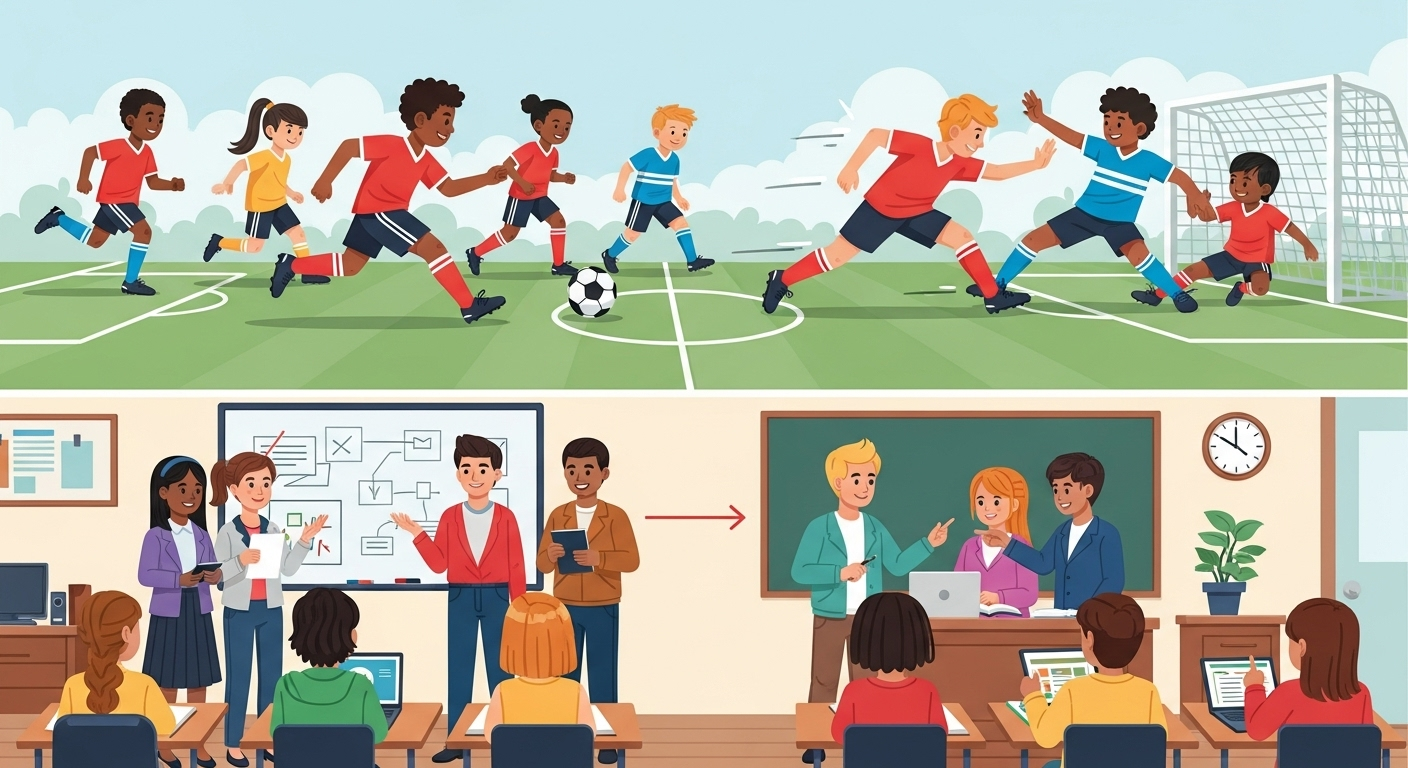
Reflection: Try This Next Time
When you play or even just watch a game:
On offense, ask: Am I helping create space or options for my team?
On defense, ask: Am I in a position to help, even if I’m not near the ball?
The more you think about these small moves, the more confident you’ll feel—whether you’re in your first-ever game or already love being on the court.