
The Captain Says “Pause.” What Happens Next?
How leadership and followership work together during conflict
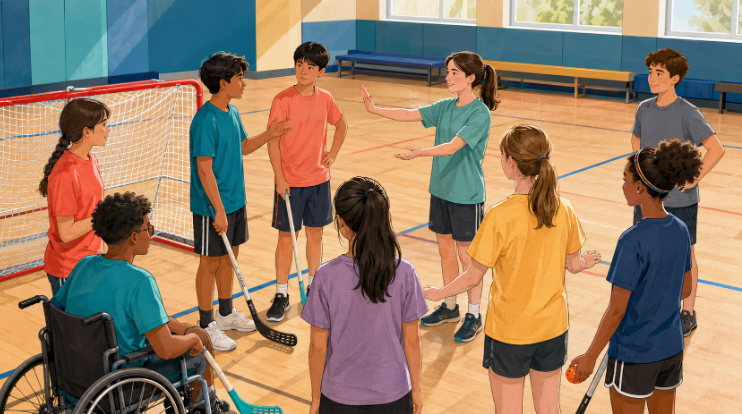
A basketball game stops over a foul. One player is certain there was contact. The other is just as certain there was not. Someone tries to settle it, but now teammates are interrupting, people are choosing sides, and one person has helpfully brought up a questionable call from ten minutes ago. The original disagreement has somehow acquired sequels.
Now run the same situation again. The disagreement is still there, and the person trying to resolve it is still the same. This time, though, teammates let both people explain what happened. Someone asks a question instead of making an accusation, another person suggests a reasonable solution, and once a decision is made, everyone gets back to playing.
What changed?
It was not just the leadership. It was the followership.
Following is not the same as obeying
We often picture leadership as one person out front while everyone else follows along. Real groups rarely work that neatly. A captain, coach, project leader or supervisor can try to guide a group, but the people around them have enormous influence over whether that leadership actually works.
Effective followership means actively helping a group move toward a shared goal. That can mean cooperating with a reasonable decision, listening when someone else is speaking, helping people work together and supporting someone who is being left out. It can also mean respectfully speaking up when you think something is unfair, unsafe or simply being missed.
In fact, leadership and followership are not permanent labels attached to people. During one activity, you might lead because you understand what needs to happen. Five minutes later, someone else may know more about the problem and you become the person listening, supporting and helping their idea work. Strong teams can move leadership around depending on what the group needs.
Conflict needs more than someone in charge
Conflict is normal whenever people do things together. Different people see situations differently, want different things and sometimes have different information. A disputed call in a game, a disagreement about strategy or frustration about someone's role does not automatically mean a team is failing. What happens after the disagreement begins matters much more.
There is some interesting biology underneath this. When a disagreement becomes heated, embarrassment, frustration or anger can increase our level of stress and emotional arousal. Attention can narrow, and it can become harder to listen carefully or consider another person's point of view. A problem that began as What actually happened? can quietly turn into How do I prove that I am right?
Other people can make that easier or harder. Sarcasm can invite more sarcasm. Interrupting can invite louder interrupting. But one teammate slowing things down, listening and asking, "What did you see?" can change the direction of the interaction.
That is where followership becomes part of conflict resolution.
What are you adding to what happens next?
Suppose two players disagree about whether the ball went out. A team leader asks each person what they saw.
Active listening from everyone else gives that process a chance to work. Cooperation means trying to solve the problem rather than trying to help your side win the argument. Modelling respectful behaviour shows other people that disagreement does not require insults, laughing at someone or turning the situation personal.
Safety and inclusion matter too. A leader can say that everyone gets a chance to speak, but if teammates roll their eyes every time one particular person talks, the group's behaviour is sending a very different message. Inclusion is not something a leader can create alone.
This gives everyone in the group some influence over a conflict, including the people who did not start it.
You may not control what another person says or does. You do have some control over what you add next. Do you add another accusation, another audience and another reason for everyone to defend themselves? Or do you add listening, useful information, a possible solution or support for someone trying to calm things down?
Sometimes good followership means disagreeing
There is another important part of this that can easily be missed. Supporting a leader does not mean automatically agreeing with them.
Suppose a captain suggests something unsafe. A teammate notices that someone is being deliberately excluded. Maybe the person trying to resolve an argument has misunderstood what happened. Staying silent simply because "they're the leader" would not necessarily help the group.
Effective followers can say, "I don't think that's safe," or "Can we hear what she was trying to say?" They can disagree without attacking the person. They can also accept a reasonable group decision after their concern has been heard, even when it was not the solution they originally wanted.
That balance takes skill. You need enough confidence to speak when something matters and enough flexibility to recognize that getting your own way is not the same thing as resolving a conflict.
The gym is not where this skill ends
The setting changes surprisingly little when you walk into a classroom.
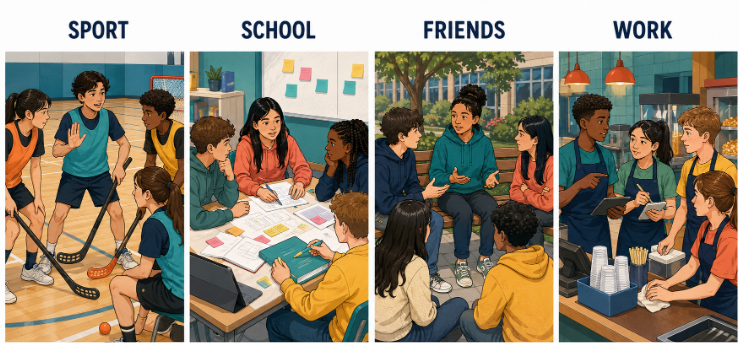
A group of four students is working on a presentation. One person is organizing the project, and two others strongly disagree about what should be included. The student leading the group can ask questions and suggest a compromise, but the other students still determine a great deal of what happens next. They can listen, help clarify the disagreement and work toward a solution, or they can choose sides and keep the argument going.
Years later, the same basic process appears in workplaces. A hospital team, construction crew, restaurant kitchen, technology company or business project may have an official leader, but that person cannot know or see everything. Other people have information, experience and perspectives the leader needs. Good workplaces depend on people being able to listen, cooperate, raise concerns, disagree respectfully and support one another.
That means learning how to handle a disagreement during a Grade 8 game is not just preparation for the next game.
You are practicing how to work with people.
Leadership works better when it does not have to work alone
Developing leadership skills can certainly help resolve conflict. A good leader can listen, keep people focused on the problem, encourage cooperation and help make sure people feel safe enough to contribute. But research on teams suggests that leadership is not something one person simply delivers to everyone else.
The people around the leader help determine what leadership becomes.
And that changes the question you can ask yourself during a conflict. Instead of only wondering, Who is going to fix this?, there is another question available:
What am I adding to what happens next?
You do not need the captain's armband, the project-leader title or, someday, the manager's office to influence the answer. Sometimes leadership means stepping forward. Sometimes it means listening, supporting, cooperating or respectfully challenging something that needs to be challenged.
Knowing when to do each is part of learning how to work with other people.
And that is a skill you can carry almost anywhere.