
A Team Needs More Than a Captain
How leadership and followership help a group succeed
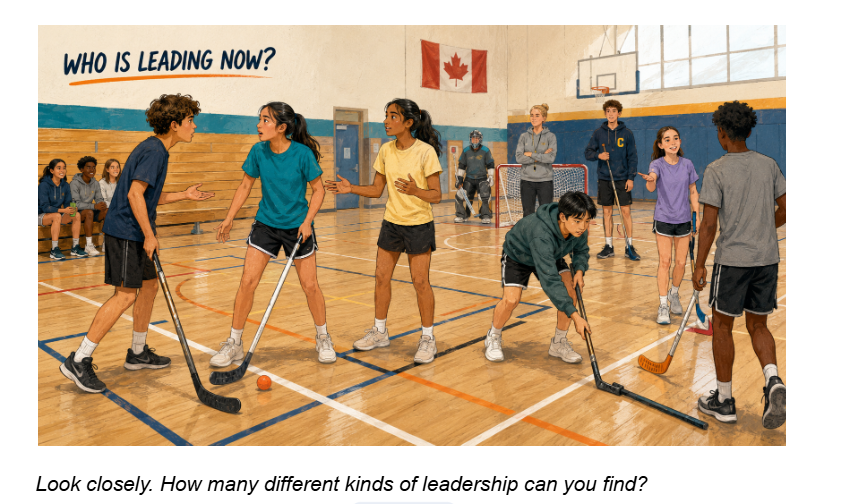
A game is getting close. The score is tied, two people disagree about what just happened, someone else has stopped getting the ball, and everybody suddenly has an opinion. One person tries to settle the disagreement. Another listens. Someone notices the player being left out and brings them back into the play.
Who is the leader?
It might be tempting to point to whoever was named captain. But leadership in games and physical activities does not always come with a title. Sometimes the most important person in the next thirty seconds is the one who listens, calms things down, notices what the group needs and helps everyone get moving again.
There Are More Roles Than We Usually Notice
Think about all the roles that can exist around physical activity. There can be players, captains, coaches, officials, instructors, organizers, scorekeepers, trainers and people responsible for equipment or safety. Even within a group of players, different roles begin to appear.
One person may be good at organizing. Someone else notices when a teammate is struggling. Another communicates clearly when everyone is confused, while someone else stays calm when the group is frustrated. These roles can change from one activity to another and even from one moment to the next.
That matters because a group does not work very well if everyone is trying to do the same job.
Five people trying to lead at exactly the same moment may produce considerably more leadership than the situation requires.
Leading Is Only Half of It
We hear a lot about developing leaders. We hear much less about developing good followers, even though every functioning group needs both.
Followership does not mean blindly doing whatever someone tells you. A good follower listens, understands the group's goal, contributes ideas, carries out responsibilities and speaks up when something is unsafe, unfair or simply not working. Sometimes good followership means supporting another person's decision because they are in the best position to make it.
That means leadership and followership can move between people. You might lead while organizing a drill because you understand it well, then follow someone else's instructions during the activity. Later, you might support a teammate who is trying to solve a disagreement.
Knowing when to step forward matters. Knowing when to let somebody else step forward matters too.
What Happens When People Disagree?
Games give us plenty of opportunities to practise this because disagreement is almost built into them. Was the ball in? Was there contact? Whose turn is it? Is that rule fair?
A useful leader does not have to win every argument. Often the first useful skill is active listening, which means paying enough attention to understand what another person is actually saying rather than spending that time preparing your comeback. That can lower the temperature of a disagreement and make cooperation possible again.
Followers have a role here too. They can listen, provide another perspective, support a reasonable solution and avoid turning a disagreement between two people into a disagreement involving twelve. Conflict resolution is therefore not simply something a leader does to a group. It is something people in the group can build together.
Your Behaviour Changes the Group
There is another form of leadership that does not require much talking at all.
People watch what other people do. If someone follows the rules even when nobody is checking, uses equipment safely, includes someone who has been left out, or stays respectful after a frustrating call, that behaviour becomes information for everyone else. It shows what is normal in that group.
The opposite works too. If influential people ridicule mistakes, ignore safety rules or treat certain people as though they do not belong, others can begin copying that behaviour. Leadership therefore includes modelling, because what you repeatedly do can influence what other people decide is acceptable.
This is one reason leadership and followership can affect both safety and inclusion. A safe and inclusive group is not created only by the person officially in charge. It depends on the small decisions being made throughout the group.
Different Situations Need Different People
The person who leads one situation may not be the best person to lead the next.
Someone who understands the rules might take the lead during a disagreement. Someone with more experience using a piece of equipment may take responsibility for setting it up safely. A quieter person who notices that someone is being excluded may see something that everybody else missed.
Being part of a group means gradually learning to ask a useful question: What does this situation need from me right now?
Sometimes the answer is to lead. Sometimes it is to listen. Sometimes it is to encourage someone, follow another person's direction, question something unsafe, help solve a conflict or simply do your part well enough that everyone else can do theirs.
The Game Eventually Ends. The Skill Doesn't.
This is where something learned through physical activity can become much bigger than the activity itself.
A science lab, group assignment, part-time job, workplace, family and community all have versions of the same problem. People have different strengths and responsibilities, disagreements happen, someone needs to listen, somebody needs to make a decision, and everyone still has to find a way forward together.
You will probably spend parts of your life leading and other parts following. In many situations, you will do both on the same day. Being good at either is less about having a title and more about recognizing what the group needs, cooperating with other people, listening carefully, modelling the behaviour you expect from others and knowing when your strengths can help.
Sport and physical activity give us a place to practise those roles while the consequences are usually fairly small. The disagreement may be about a ball going out of bounds rather than a decision at work that affects twenty people. But the underlying skills are surprisingly similar.
Learning to lead matters.
Learning how to contribute when someone else is leading may matter just as much.