
Move Your Body, Boost Your Life
Reviewed by Dr. Scott Rollo, PhD & Dr. Barry Wiens, MD
Why Even a Little Movement Can Change How You Feel
Maybe you don’t play on a team. Maybe sports just aren’t your thing. That’s okay.
Being active isn’t about joining a gym or running laps — it’s about finding simple ways to move that make you feel better, one step at a time.
When you move your body — even for a few minutes — you can think more clearly, feel less stressed, and have more energy for the things you enjoy.
1. Feel Better in Your Own Skin
You don’t have to sweat buckets or keep score to get results. Stretching in bed, dancing to one song, or taking a short walk can help your body feel lighter and more awake.
Try this: During a study break, stand up and reach for the ceiling, roll your shoulders, or walk to the kitchen and back twice. Easy, right?
2. Clear Your Head
If your brain feels full — from homework, scrolling, or gaming — moving a little helps. It sends “feel-good” signals to your brain so you can relax and refocus.
Try this: When you feel stuck, put on headphones and move to one song. No one has to see you.
3. Build Confidence, Quietly
Small wins matter. Reaching your own goal — like standing up and moving for two minutes every hour — can give you a boost. You don’t need to compare yourself to anyone.
Think about it: You don’t have to be “good” at exercise to feel good from it.
4. Ways to Move (No Sports Required)
Pace around while on the phone.
Do wall push-ups or calf raises while brushing your teeth.
Walk to the end of the street and back.
Stretch while watching a video.
Your Turn
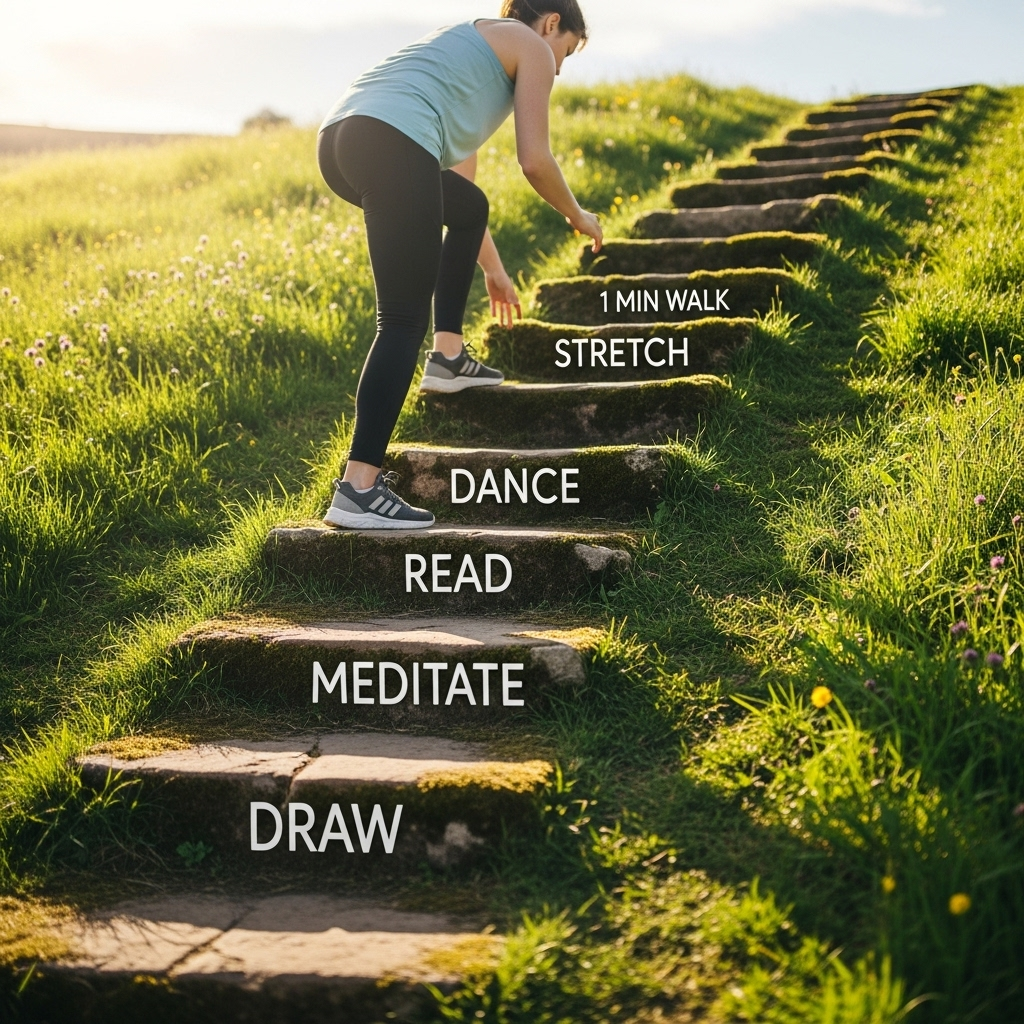
How do you feel after you move, even for a minute?
What’s one movement you could fit in today without changing your schedule?
Remember: Movement is yours to choose. Start with what feels easy, keep it private if you want, and let those small steps build. Over time, you’ll notice the difference — in how you feel, think, and even sleep.
References:
Poitras, V. J., Gray, C. E., Borghese, M. M., Carson, V., Chaput, J. P., Janssen, I., ... & Tremblay, M. S. (2016). Systematic review of the relationships between objectively measured physical activity and health indicators in school-aged children and youth. Applied physiology, nutrition, and metabolism, 41(6), S197-S239.
Dale, L. P., Vanderloo, L., Moore, S., & Faulkner, G. (2019). Physical activity and depression, anxiety, and self-esteem in children and youth: An umbrella systematic review. Mental health and physical activity, 16, 66-79.
Hillman, C. H., Logan, N. E., & Shigeta, T. T. (2019). A review of acute physical activity effects on brain and cognition in children. Translational Journal of the American College of Sports Medicine, 4(17), 132-136.
Canadian Paediatric Society. (2025, May). Physical activity for children and youth. Canadian Paediatric Society. https://caringforkids.cps.ca/handouts/healthy-living/physical_activity