
Move More Without Becoming an Exercise Warrior
It is 4:00 p.m., and Maya has just come home from school. She sits down to watch one short video before homework, but one video becomes six, homework happens sitting down, and later she relaxes with a game on her tablet. By bedtime, she realizes that most of her afternoon has been spent sitting. Maya does not need to become an exercise warrior overnight. She simply needs a few small ways to bring more movement into her day.
What Is Physical Health?
Physical health is about how well your body can grow, function and handle everyday activities. It includes a healthy heart and lungs, strong muscles and bones, energy and mobility. You can support physical health by moving regularly and reducing long periods of sitting. This does not mean changing your whole life in one day. Small choices repeated regularly can lead to bigger results.
Sitting Is Normal. Too Much Sitting Is the Problem.
The next day, Maya notices how often she sits: on the bus, in class, during homework and while using her phone. Sedentary behaviour means spending awake time with very little movement, usually while sitting or lying down. Sitting is a normal part of school, travel and rest, but long periods of it can replace opportunities to move. Too much sedentary time can contribute to negative physical health outcomes. A simple solution is to break up sitting with short periods of movement.
Meet the Exercise Snack
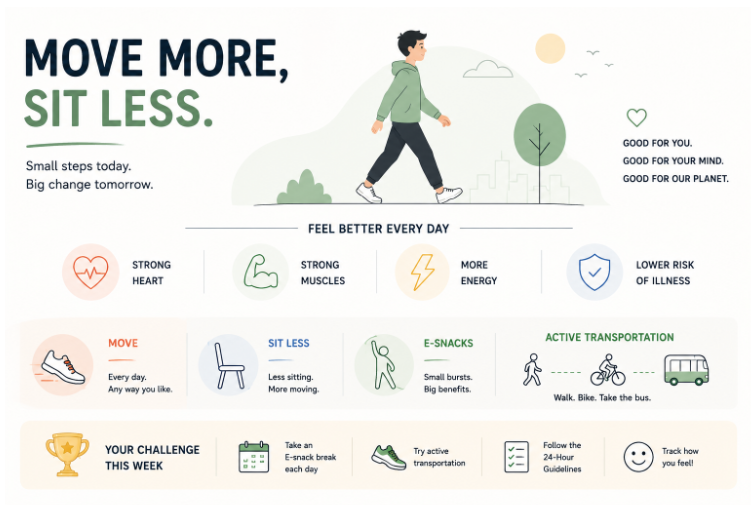
Maya decides to try an exercise snack, and no, it is not a granola bar doing jumping jacks. An exercise snack is a short burst of movement that fits easily into your day. It could be a quick walk, a few stairs, some squats, stretching or a two minute dance break. These small bursts do not replace all physical activity, but they can make a sedentary day more active. On a busy day, a little movement is often much better than waiting for the perfect time for a huge workout.
Build Your Own Movement Menu
Instead of promising to exercise for an hour every day, Maya chooses small activities she can actually repeat. This gives her agency, meaning she has control over how physical activity fits into her routine. It also uses self management because she plans movement instead of waiting to feel motivated. The activities do not have to be difficult or impressive. They simply have to get her moving more often.
Walk for five or ten minutes after school or dinner.
Stretch or move between homework tasks.
Take the stairs when it is safe and practical.
Try squats, wall push ups or a quick dance break during screen time.
What Do the Canadian Guidelines Say?
Canada's 24 Hour Movement Guidelines for children and youth ages 5 to 17 look at movement across the whole day. They recommend at least 60 minutes of moderate to vigorous physical activity each day, along with several hours of lighter activity. Vigorous activity and activities that strengthen muscles and bones should be included at least three days each week. The guidelines also recommend limiting recreational screen time to no more than two hours per day and reducing long periods of sitting. The main message is simple: move more, sit less and get enough sleep.
Use the FITT Principle
The FITT Principle is another way to plan activity without making it complicated. FITT stands for Frequency, Intensity, Time and Type: how often you move, how hard you move, how long you move and what activity you choose. Maya might choose a brisk ten minute walk today and badminton with friends tomorrow. She does not need every activity to be long or exhausting. FITT helps turn the vague idea of “exercise more” into a plan that feels possible.
Turn Travel Time Into Movement Time
Maya also notices that her friend's house is only a short walk away, even though she usually asks for a ride. Walking, biking, scootering or wheeling to places when it is safe is called active transportation. It reduces sitting while adding physical activity without needing a separate workout. Active travel can also support mental well being by adding fresh air, daylight and sometimes time with friends. Maya still chooses a vehicle when distance, weather or safety makes sense, but now she asks, “Could I move there safely?” first.
The Small Step Challenge
Now it is your turn to become a movement detective. Think about one part of your day when you sit for a long time and choose one small way to interrupt it. Pick something realistic enough to do even when school is busy or motivation is low. Connect that small action to a bigger goal, such as having more energy, feeling stronger or spending more time outdoors. The goal is not to become an athlete overnight. The goal is to create a routine you can actually maintain.
Move for a few minutes during a long homework session.
Try one exercise snack each day.
Walk or wheel part of a safe trip.
Plan one active activity with a friend this week.
What Changed for Maya?
By the end of the week, Maya has not become a marathon runner, and she does not need to. She still sits in class, does homework and enjoys her screen time, but sitting no longer fills every free moment. She takes short movement breaks, walks when it makes sense and chooses activities she enjoys. These small choices help replace some sedentary time with physical activity. Maya has learned that maintaining physical health is less about one giant workout and more about giving movement many chances to happen.
Your Turn
Look at your day from morning to bedtime and find your longest sitting period. What is one exercise snack you could add, and is there a trip you could safely walk, bike or wheel instead? Choose one change and try it for several days. Notice whether it affects your energy, mood or how your body feels. The best activity plan is not the most extreme one; it is the one you can keep doing.
Quick Takeaway
You do not have to become an exercise warrior to improve your physical health. Moving more, breaking up long sitting periods, using active transportation and following movement guidelines can all help. Exercise snacks and the FITT Principle make it easier to turn big health goals into small everyday actions. Those small actions can build confidence and make an active routine easier to maintain. Start small, keep moving and let the routine grow with you.