Guidelines Aren't the Starting Line, and They Are Not the Finish Line.
For a while, millions of people were walking around parks and neighbourhoods trying to catch imaginary creatures on their phones. Some walked farther than they ever had day-in day-out. Some planned when they would go out, met friends, explored new places and looked forward to doing it again. Pokémon GO got people moving, including people who had not been very active before. And here is the interesting part: hardly anyone started playing because they had read the physical activity guidelines.
The game had accidentally brought together some powerful ingredients for becoming active. People chose to do it themselves. They enjoyed it. They could get better at it. They could do it with other people. Researchers call these ideas autonomy, competence and relatedness. In Grade 7 language, that means I chose this, I can get better at this, and I can share this with other people. Physical activity became connected to something people wanted to do, planned for and looked forward to rather than something somebody else was telling them they should do.
Of course, the Pokémon GO craze eventually faded for many people. That teaches us something too. Getting someone moving for a few weeks is different from building an active life. If you begin scheduling time to be active, keep doing it, notice your successes and gradually do more, you can start becoming confident that being active is something you can actually fit into your life. Eventually, you may stop thinking, I really should exercise, and begin thinking, I'm someone who is active.
So Where Do the Guidelines Fit?
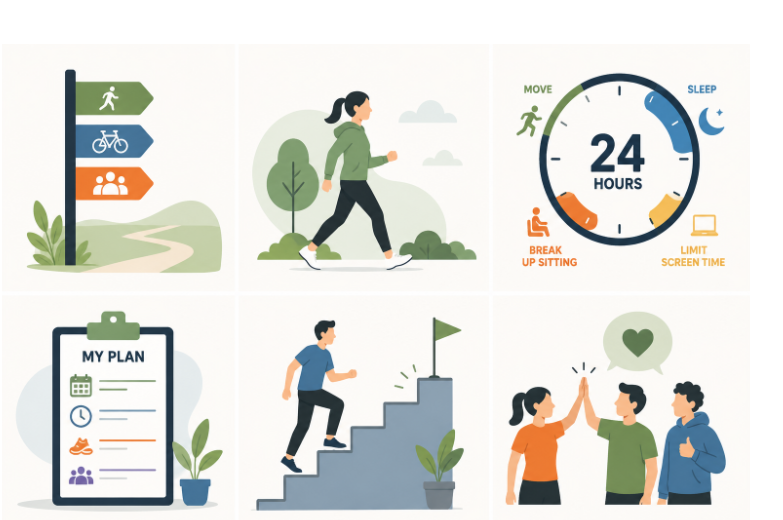
Canada's 24-Hour Movement Guidelines give young people an important direction. For ages 5 to 17, they recommend an average of at least 60 minutes each day of moderate-to-vigorous physical activity, several hours of lighter physical activity, and no more than two hours of recreational screen time. Sleep and breaking up long periods of sitting are also important because physical well-being depends on how we use the whole 24-hour day.
But guidelines are neither the starting line nor the finish line. They tell you where better health is found. Getting started usually happens somewhere else: choosing something you enjoy, making it social when you can, starting small enough that you will actually do it, recognizing what you accomplished, and then building from there.
That 60 minutes does not have to come from a 60-minute workout. Planned exercise can be one part of your movement, but an active day can include much more. Walk or bike somewhere. Play basketball with friends. Take the stairs. Walk across the parking lot instead of being dropped at the door. Help carry groceries. Add an exercise snack, or E-snack, by doing a few minutes of brisk walking, stairs, squats or another activity between longer periods of sitting. Look for opportunities to move, because it all adds up.
FITT Helps You Build
Once you have found activities you want to do, the FITT Principle can help you develop them. Frequency is how often you do the activity. Intensity is how hard your body works. Time is how long you do it. Type is the activity you choose. Instead of saying, "I should exercise more," you might decide, I'll bike with my friend three afternoons this week for 20 minutes. Now you have something you chose, something you enjoy and an actual plan for doing it.
And if 20 minutes feels like too much right now, start with ten. Baby steps still move you forward. Notice that you did it, schedule the next one and gradually grow from there. A rough day does not need to become a zero day either. Take an E-snack, walk somewhere or find another small opportunity to move.
"It's not about perfection, it's about progression."
The guidelines give you direction. FITT can help you build a plan. But neither can choose an activity for you, make you enjoy it or put it into your day. The strongest formula may be much simpler: choose it yourself, find something you enjoy, involve other people when you can, start small, schedule it, recognize your success and keep growing. That is how a guideline on a page can eventually become an active life.
Guidelines Help You Find Your Way
Guidelines give you evidence-informed targets. FITT helps turn those targets into a plan, while E-snacks give you another way to add movement when a longer activity is difficult. None of them requires perfection. Small amounts can become larger amounts, and repeated choices can become routines.
So instead of only asking, "Did I reach 60 minutes today?", ask: Where could I sit a little less? Where could I add some movement? What would I enjoy doing? What could I realistically schedule this week? The guidelines can show you where to go, but you still get to decide how you begin.