
The Ten Minute Anchor
At 7:12 on a Tuesday morning, Maya stood in her bedroom staring at her running shoes as if they’d personally offended her. The night before, she’d decided to go for a ten minute walk before school, but her bed was suddenly making a very strong argument to stay and do nothing. She almost gave up, then remembered that ten minutes was shorter than many videos she watched without noticing. So she put on her shoes, walked outside, and did a quick loop around the block. When she came back, she checked the activity off her list and thought, “Okay, I actually did it.”
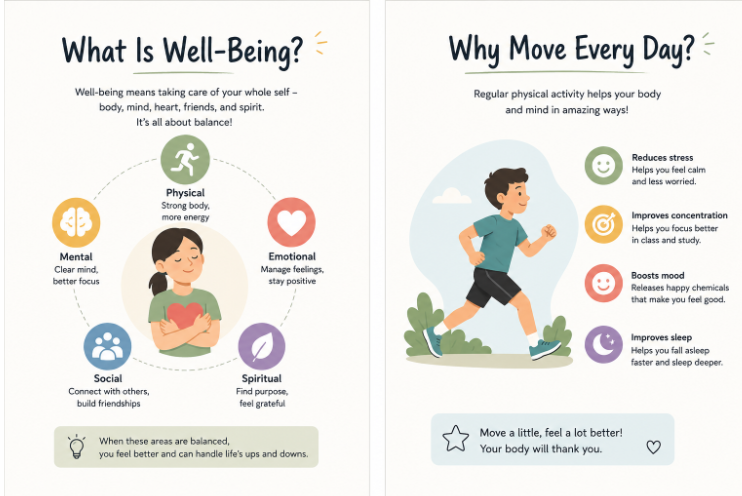
Nothing magical happened during those ten minutes. Maya didn’t return with superhero muscles, perfect grades, or the ability to understand every math question before breakfast. What she did gain was a small feeling of accomplishment because she had made a plan and followed through. That feeling matters because well-being is about more than physical health. It includes your physical, mental, emotional, social, and spiritual health and how these parts work together in your life.
So, What Is Well-Being?
Well-being describes how you are doing as a whole person. Physical well-being includes movement, energy, nutrition, sleep, and caring for your body. While mental and emotional well-being includes managing stress, concentration, and feelings. Social well-being is about relationships and connection. Spiritual well-being can involve meaning, values, culture, beliefs, or things that help you feel grounded. You don’t need to feel amazing in every area every day. Healthy habits such as regular activity, good nutrition, appropriate sleep, supportive relationships, and self-care can help create balance over time.
Physical activity is useful because it’s one habit can support several parts of your well-being at once. Being active helps reduce everyday stress and support mood, concentration, sleep, and overall physical health. Walking with a friend or playing a team game can also provide social connection. Learning a new skill or completing a planned activity can create a feeling of success. One simple activity may therefore be helping you in more ways than you realize.
The Secret Is Consistency
A few days later, Maya's cousin Leo announced that he was going to exercise for two hours because he’d barely moved all week. Maya asked if he planned to exercise the next day, and Leo replied, “Absolutely not. I’ll still be recovering until Thursday.” His plan was funny, but it shows the difference between doing physical activity once and making it regular. Well-being is more likely to be supported when movement becomes a repeated part of your life. Consistency gives your body and mind more opportunities to experience the benefits of being active.
This is where regular physical activity can become an anchor. An anchor is a reliable habit connected to a certain part of your day, such as moving after you wake up, after school, or before dinner. Maya's anchor was ten minutes of movement before breakfast, and checking it off her list, giving her a small sense of success each morning. The goal was not to create a perfect streak that could never be broken. It was to make returning to movement easier, even after a busy or difficult day.
Try the Anchor Challenge
Choose an activity you can realistically repeat.
Decide when you will usually do it.
Start with an amount of time that feels manageable.
Find a simple way to mark when you complete it.
Have a plan for restarting if you miss a day.
Starting small can be surprisingly powerful. Ten or fifteen minutes may sound less impressive than planning a giant workout, but a small plan you complete is more useful than an enormous plan that never happens. Every completed session gives you evidence that you can make a healthy choice and follow through. That feeling of accomplishment can support emotional well-being and make you more willing to continue. Over time, small successes can turn into a routine.
Pair Movement With Another Helpful Habit
Once Maya's morning movement became familiar, she added one minute of slow breathing afterward. Some people use a strategy such as box breathing, while others might stretch, reflect, set a goal, or practice useful positive self-talk. Physical activity remains the anchor because finishing it reminds you to practice the next habit. You might tell yourself, “I handled that, and now I can handle my next task.” One step at a time. Pairing movement with another supportive habit can help care for both your body and mind.
Find Movement That Fits You
Regular activity doesn’t have to mean running or doing a serious workout. You might dance, swim, cycle, wheel, walk a dog, shoot baskets, stretch, play soccer, or be active with friends. Choosing something you enjoy, or at least don’t spend the entire time wishing it would end, makes it easier to return to it. Different activities can also support different parts of your well-being. A walk with family may build connection, basketball may provide teamwork, and cycling may give you quiet time to think.
Maintaining an active life does not mean doing the same activity forever. Maya eventually got bored of seeing the same three driveways and one extremely judgmental squirrel on her morning walk. Some mornings she walked, some mornings she stretched, and on Fridays she danced to two songs before breakfast. The activity changed, but her anchor stayed because she continued making time to move. Being consistent means continuing to return to movement, not being perfect every day.
Your Turn
Think about one part of your day that happens regularly, such as waking up, arriving home from school, or finishing homework. Now imagine attaching a small amount of physical activity to that moment. Keep the first version simple enough that you could do it on an ordinary day, not only when you feel extremely motivated. You could also pair it with slow breathing, stretching, reflection, or useful self-talk. The routine does not need to impress anyone else because its job is to support your well-being.
What type of movement usually makes you feel better afterward?
What time of day would make activity easiest to repeat?
Would you rather move alone or with other people?
What small success could you realistically check off this week?
The Check Mark Is Bigger Than It Looks
By the end of the month, Maya was not suddenly a different person. She still had stressful mornings, difficult homework, and occasional arguments with her alarm clock. What had changed was that she had built one reliable habit that supported several parts of her well-being. Regular movement gave her opportunities to care for her physical health, manage stress, support concentration and sleep, and experience accomplishment. Her little check mark was not proof of perfection; it was proof that she could keep returning to something helpful.
That is the bigger idea behind leading an active life. Regular physical activity can improve well-being when you begin moving more, and it can help maintain well-being when movement becomes a consistent part of your routine. It works best alongside other healthy habits such as appropriate sleep, nutritious food, supportive relationships, and self-care. You do not need one enormous transformation to begin. Sometimes improving well-being starts with ten minutes, one useful routine, and the decision to come back tomorrow.