
What is Metabolic Health
Reviewed by Dr. Peter Rawlek, MD, Dr. Valena Wright, MD and Dr. Scott Rollo, PhD
Metabolic health is how well your body handles and uses energy and nutrients from the food you eat, and how that energy is stored and managed over time.
Every time you eat, food is broken down into usable forms, including sugars (glucose), fats, amino acids and other nutrients that enter your bloodstream. Your body then releases insulin, a hormone that helps move glucose out of the blood and into cells where it can be used for energy or stored for later use. When this system is working well, energy flows in a steady, controlled way and the body stays in balance.
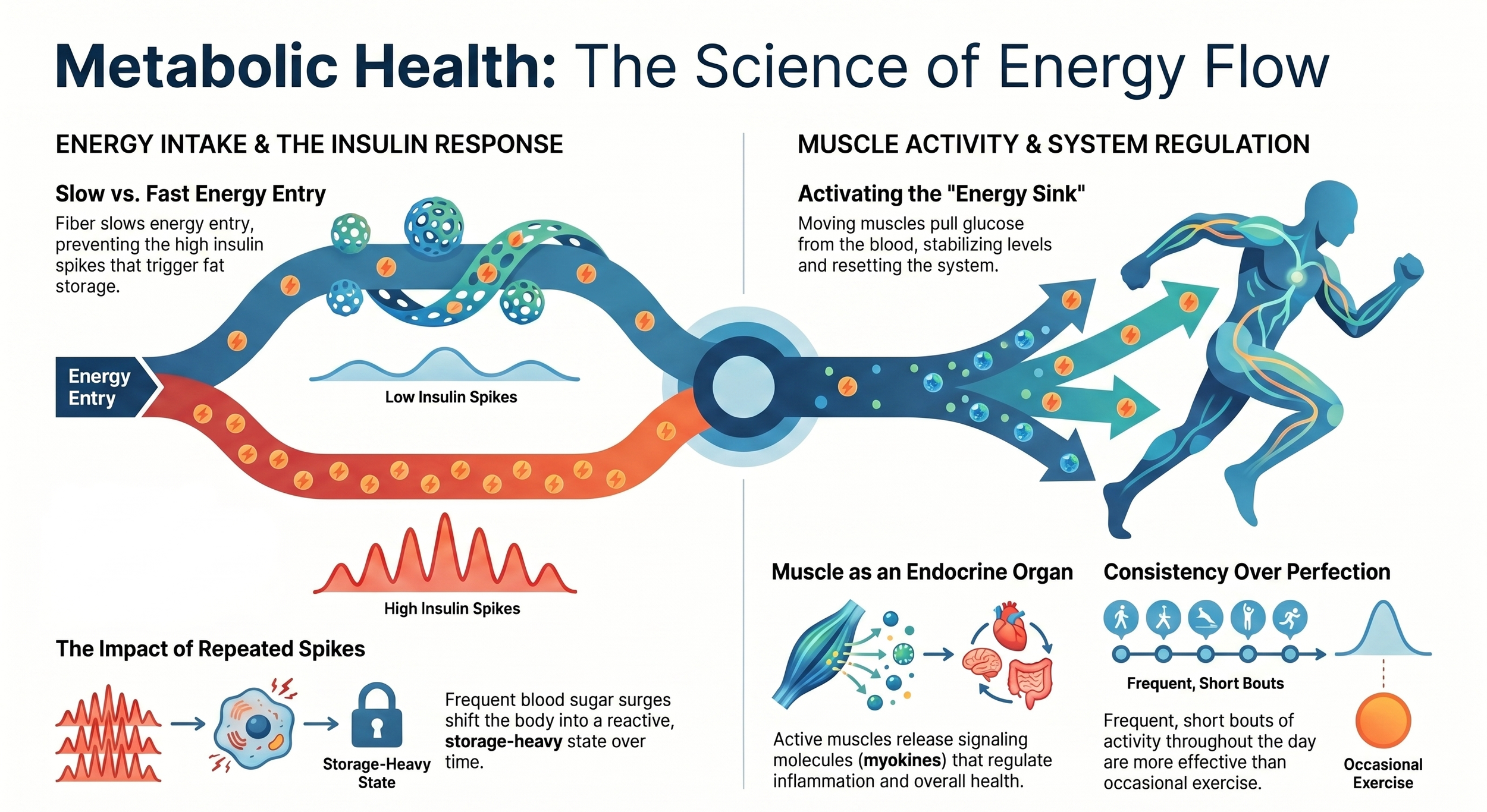
There is another critical piece to this system that often gets overlooked. Fibre. Fibre is part of food, but it does not enter the bloodstream. Instead, it moves through the digestive system, from the mouth, to the stomach, and into the large intestine, doing important work along the way. It slows how quickly energy enters the body, supports digestion, and feeds the gut microbiome. In doing so, it helps regulate how the entire system responds, keeping energy more stable and the body in control.
What Happens When Energy Comes in Too Fast?
When foods are low in fibre and highly processed, especially sugary drinks or juices without the natural pulp, energy enters the bloodstream very quickly. Blood sugar rises fast. The body responds with a strong release of insulin to bring it back down. That insulin acts like a signal, pushing sugar out of the blood and into cells.
When large amounts of sugar arrive suddenly, much of it is directed toward storage. Adipose (fat) cells are one of the main places this excess energy is stored for later use.
Why Repeated Spikes Matter
One spike is not the issue. The pattern is.
When this cycle happens repeatedly, day in and day out:
energy is frequently entering the system too quickly
insulin responses become larger and more frequent
the body relies more on storage pathways
Over time, this shifts how the body manages energy. The system becomes more reactive and less controlled, a key feature of reduced metabolic health.
What Does Good Metabolic Health Look Like?
When metabolic health is strong:
blood sugar stays more stable
energy levels are steady
hunger signals are well regulated
the body can use and store energy appropriately
You don’t feel constant swings. The system just works.
Where Does Fibre Fit In?
Fibre helps control the speed of energy entering the body. It slows digestion. It reduces sharp rises in blood sugar. It helps limit large insulin surges. This allows the body to stay in control, rather than constantly reacting.
Movement Matters Too
Regular physical activity helps regulate inflammation and how the body manages energy.
When we move, the system resets. When we don’t, signals linger longer than they should, and the body stays more reactive than regulated.
It is important to understand the relationship between movement and muscle. A muscle that is regularly activated changes. It shifts from a passive, underused tissue into a critical organ for managing energy. With each bout of activity, receptors in muscle open up, pulling in blood sugar and helping stabilize levels rather than allowing large swings.
Active muscle is not quiet. It releases signalling molecules, myokines, that support multiple systems in the body. These signals reach beyond muscle, influencing gut function, brain health, and overall system regulation. With each step, jump, or hop, you are reinforcing that system.
Over time, frequent short bouts of activity throughout the day turn the key on one of the body’s most powerful anti-inflammatory systems. Muscle, when used regularly, becomes one of the most influential endocrine organs in the body, helping regulate blood sugar, manage inflammation, and support mental well-being.
But this only happens when muscle is used. When it sits for hours on end, it becomes, in effect, a sedentary mass in a chair, and that regulatory influence is lost.
It is not about perfection. It is about consistency. It’s about giving the body repeated opportunities to turn that system on.
Simple Way to Think About It
Metabolic health is about how energy moves and where it goes.
When energy comes in slowly → the body uses it effectively
When energy comes in quickly → the body is forced to react and store more of it
Quick Check
Think about your day:
Did you feel steady and focused? What did you take in?
Or did you feel ups and downs in energy and hunger? What came before that?
That’s your metabolism responding to how energy is entering your body.
Closing Thought
This is not about one food choice. It is about patterns over time.
Small, consistent changes, especially increasing fibre, improving food choices, and moving regularly, help the system stay balanced and in control.
Start small. Remain strong.
Build on early foundations of success.