
Feeding the Brain During Exam Season
Why the stressed, studying brain depends on steady fuel, not fast fuel
Reviewed by GoGet.Fit Content Development Team
Parents Know This Scene
A student is exhausted and studying late. Notes, screens, and stress are everywhere. The kitchen suddenly becomes a search for a quick energy fix. Sugary coffee drinks, candy, chips, energy drinks, and fast snacks start becoming the go to choices because they promise a quick boost and a fast fix.
Most students believe they are helping themselves push through. Biologically, the opposite often happens.
The good news is that small changes in hydration, nutrition, movement, and sleep can significantly improve the biological environment the brain depends on for learning and performance. We will talk about those small changes that are big wins.
Why stressed students hunt for quick sugar
Stress during exam preparation is normal. It’s a given. Some students experience it more intensely than others, but all students experience stress while studying and preparing for exams.
The stress response is not “bad.” It is adaptive survival biology. Under stress, the body readies itself for fight or flight. Heart rate rises. Alertness increases. Energy is rapidly mobilized because, over thousands of years, survival depended on rapid physical action. And then rapid action required quick energy.
That’s why stressed students naturally start searching for sugary foods, energy drinks, caffeine, and highly processed snacks. The brain is trying to prepare the body for action. The problem is that studying and exams are not physical survival events.
The learning brain performs best on steady fuel, not fast fuel.
What happens when students consume high sugar foods and drinks?
When students consume large amounts of rapidly absorbed sugar, especially from sugary drinks and highly processed foods, sugar floods into the bloodstream and blood sugar rises very quickly. The body immediately fights back to restore a steady, stable internal environment. To do this, it releases large amounts of insulin to rapidly move sugar out of the bloodstream and into storage.
But the body often overcorrects. And sugar levels then fall quickly, creating the familiar sugar crash. Concentration drops. Students become thirstier, mentally foggy, irritable, distracted, emotionally reactive, and tired. Many then reach for more sugar or caffeine believing they are helping themselves push through, while biologically the cycle simply starts all over again.
At the same time, high sugar intake disrupts water balance in the body and increases dehydration precisely when the brain needs a stable internal environment for learning and focus.
In many ways, dehydration becomes a hydration problem mistaken for a fuel problem.
The brain students take into the classroom is built in the kitchen
The developing brain is biologically expensive to run. The brain is only about 2% of body weight, but in young people it consumes an enormous share of the body’s available energy. During exam season, students are not simply feeding their body. They are primarily feeding their brain to do its best work: to remember and learn.
The developing, learning brain does not just need fuel. It needs building materials.
Memory systems, attention systems, emotional regulation systems, and stress management systems are biologically built over time from the nutrients consistently delivered to the brain and body. Highly processed, low fibre, nutrient poor foods may temporarily provide rapid energy, but they do not provide the stable nutritional environment the brain depends on for learning and healthy development.
The brain depends on an entire nutritional orchestra, not sugar alone.
Fibre may be one of the most important learning nutrients
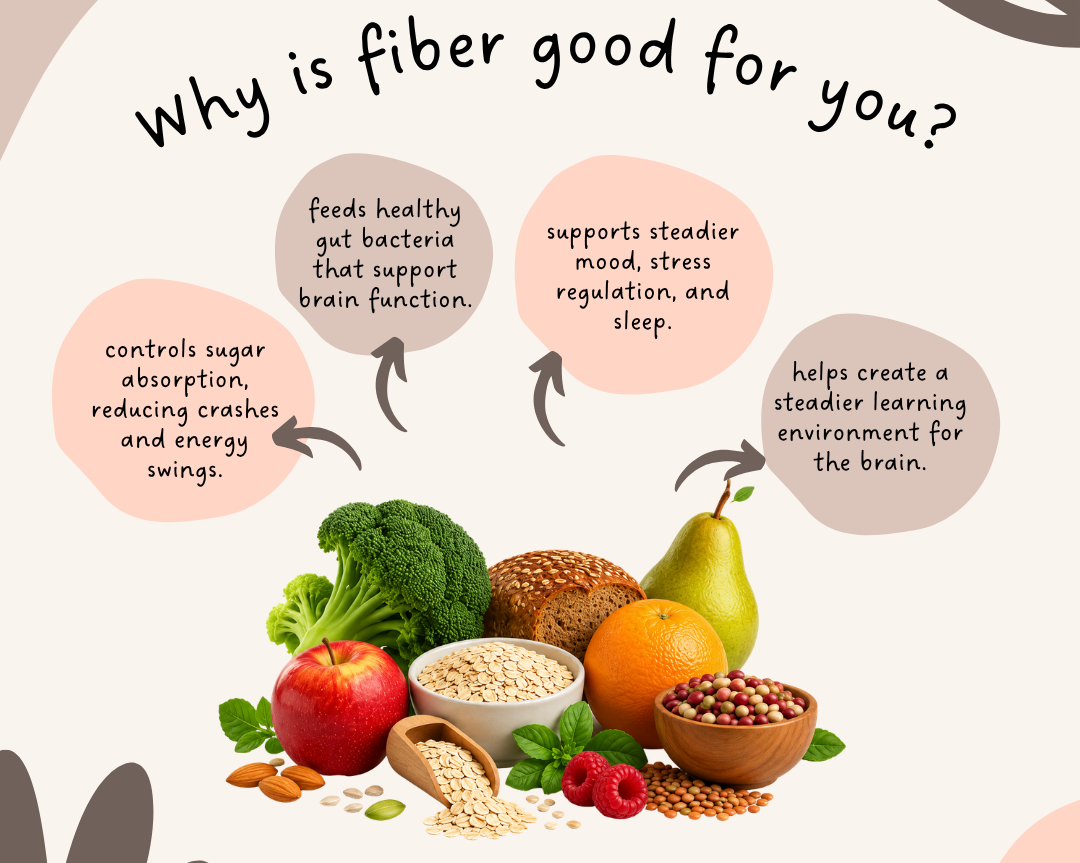
Fibre is often misunderstood as something only important for digestion. The reality is fibre plays the central role in how rapid sugar will enter the body. Over thousands of years, the digestive system developed around natural, fibre rich foods that released energy slowly and steadily. That is what the body was built around.
Fibre is the king regulator controlling how quickly sugar moves from the gut into the bloodstream. This slower, steadier release of energy helps create a more stable environment for concentration, learning, mood, and emotional regulation.
Ultra processed foods commonly remove much of the natural fibre and add chemical attractants (chemicals that are flavours). But the critical point here is that without fibre, sugar is rapidly delivered into the bloodstream instead. The result is dramatic swings in blood sugar levels rather than the slow, steady fuel the brain performs best on. Those added chemicals may also affect brain chemistry directly or indirectly. That creates a significantly more challenging environment for learning and brain performance, especially for students.
The brain does not perform well on fast fuel. Its best performance is on steady fuel.
Fibre rich, minimally processed foods may be one of the single most important nutritional choices families make to support steady brain function and learning.
The brain does not work alone
The brain and gut are deeply connected. Scientists now understand that they are constantly communicating with each other through nerves, hormones, immune signals, and chemicals produced inside the digestive system. This connection is often called the gut brain axis, and it plays an important role in mood, focus, stress regulation, emotional well being, and learning.
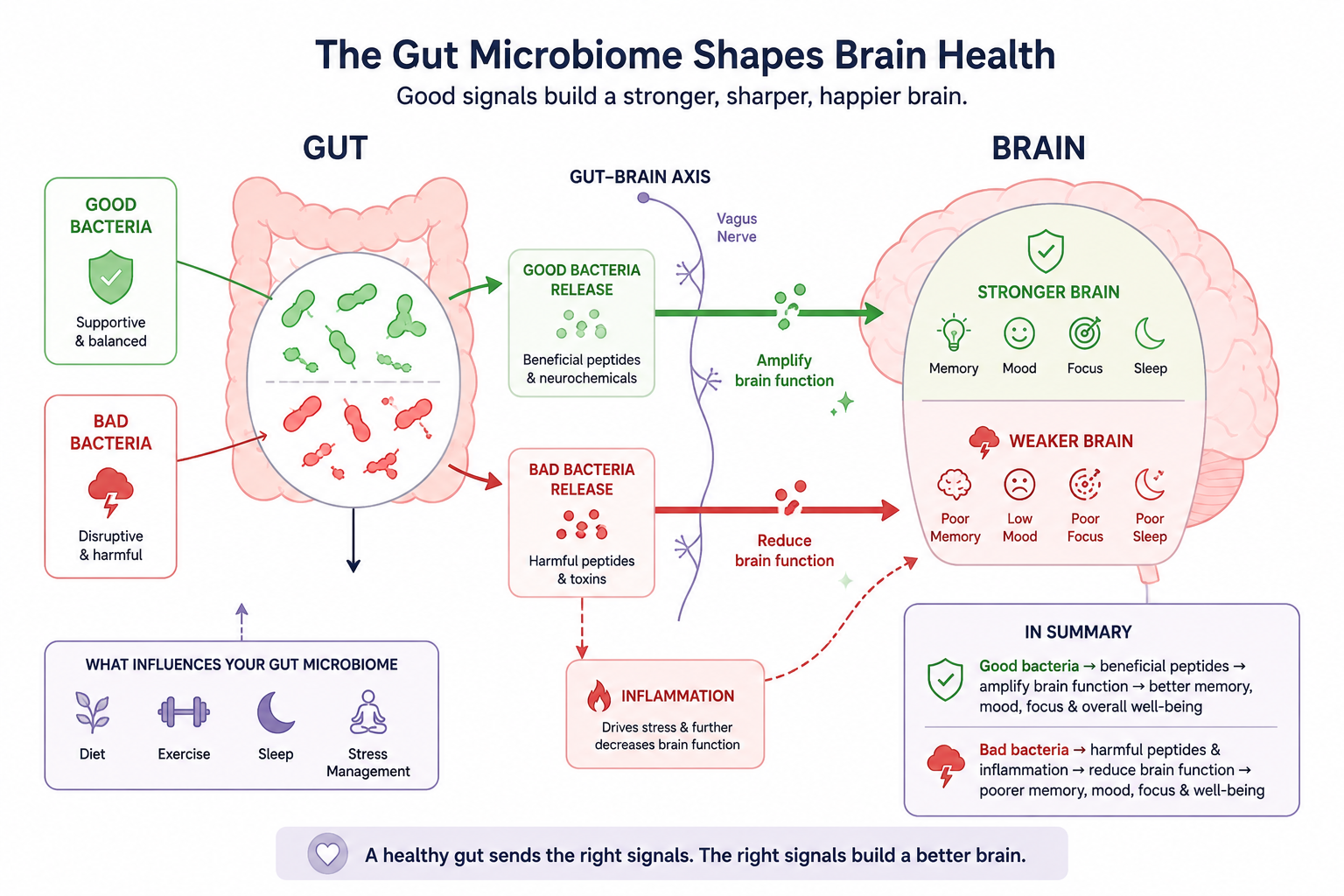
Image generated using AI guided prompts
Unprocessed fibre feeds the good bacteria → these secrete beneficial peptides → these travel to the brain → amplify brain function → better memory + better mood + better focus & overall well-being.
Fibre has a second critical role here. It feeds the healthy bacteria living in the gut microbiome. These bacteria produce important chemicals that support healthier brain function, emotional regulation, attention, and stress management. Fibre is not just important for digestion. It is one of the key nutritional supports helping create a steadier, healthier environment for learning and brain performance.
When students regularly eat fibre rich foods like oats, whole grains, beans, lentils, vegetables, fruit, nuts, and seeds, they are not just feeding their bodies, they are helping support a steadier internal environment for learning and emotional regulation. That is, natural fibre intake is for the brain’s best performance. Choose natural unprocessed food for the best nature naturally provides.
And… Movement is important, it helps the learning brain
Short bouts of movement during studying are not distractions from learning. Movement directly supports the biology of learning under stress. Brief movement readily increases blood flow to the brain, delivering oxygen and nutrients while helping regulate stress and sugar levels. Movement also stimulates the release of important signalling molecules from muscles that help support brain function, new learning and attention.
The studying brain was never designed to sit motionless for hours under continuous stress. Even short “exercise snacks,” walking, stairs, stretching, body weight movements, or a few minutes of activity, help refresh attention systems and create a healthier biological environment for learning and memory formation.
Final thoughts
It’s about progression, not perfection.
The goal is not perfection. The goal is helping create the best possible biological environment for the brain to learn, focus, regulate emotions, and perform optimally during stressful periods. To build off some simple starters of what-to-do and not-to-dos.
Healthy food choices start early at home.
Children need to gradually learn that food is not just about feeling full. Food is information and building material for the brain.
Fuel their bodies. Feed their minds. Help them thrive.
Behind every successful student is a well fueled brain.