Burnout Is Biological
Reviewed by Dr. Scott Rollo, PhD, Dr. Barry Wiens, MD and Dr. Simon Ward, MD
What Chronic Stress Is Doing Inside the Cell
Most of us think of stress as something emotional.
Busy. Overwhelmed. Tired.
But chronic stress is not just a feeling. It is a biological load that changes how your body produces energy.
As a physician, one of the most important shifts in our understanding is this. What we call burnout begins at the cellular level.
Inside every cell are mitochondria. You can think of them as your body’s power plants. They convert oxygen and fuel into ATP, the energy your brain, muscles, and nervous system use to function.
In practice, what we label as emotional burnout begins inside the cell. Chronic stress disrupts mitochondrial energy production. Energy production is disrupted. The body wisely slows to conserve fuel, and our thinking, mood, and motivation reflect that reduced biological capacity. The fatigue, brain fog, and emotional exhaustion we feel are simply the downstream effects of that biology. This is not personal failure or mindset, this is pure cellular physiology, and specifically the health of the mitochondria energy system, the tiny energy engines that power each and every cell.
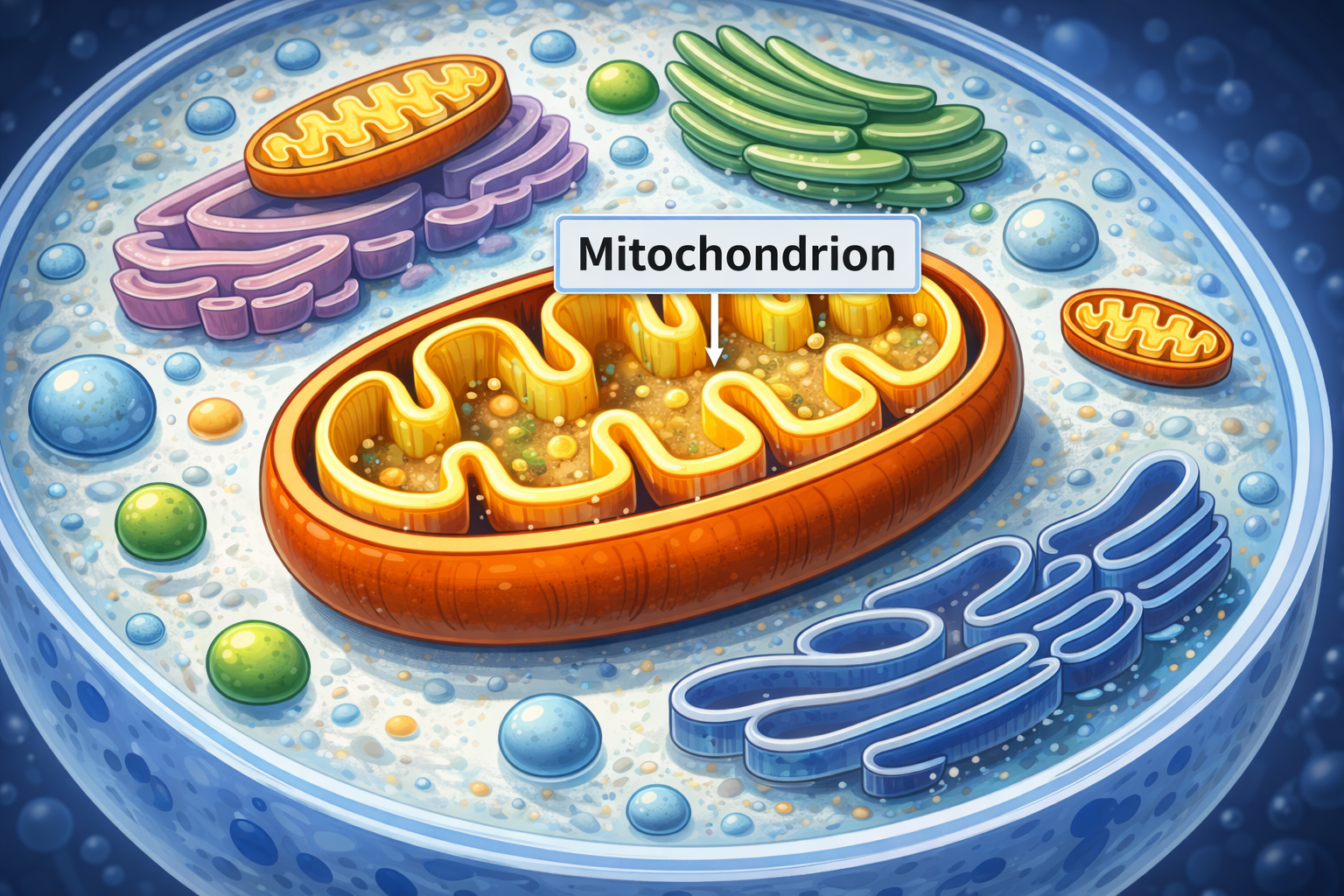
Mitochondria are not only energy producers. They are also stress sensors.
Mitochondrial Dysfunction → “That Burnt out Feeling”
When the body stays in fight or flight for too long, stress hormones like cortisol and adrenaline remain elevated. Inflammation rises. Blood sugar regulation becomes less stable. Over time, this environment strains mitochondria and reduces how efficiently they produce energy.
When energy production drops, the body adapts to protect itself.
How Your Body Shows Mitochondria Dysfunction
It slows things down:
Thinking feels heavier.
Focus takes more effort.
Exercise tolerance drops.
Recovery takes longer.
Mood feels flatter.
These are not motivation problems. They are predictable biological responses to sustained demand.
In other words, the body is conserving energy.
That is protection, not failure.
This is why “just push through” often backfires. Pushing assumes energy is available and recovery systems are intact. In chronic stress, neither is reliably true. Adding more demand simply deepens the deficit.
Recovery?
Recovery, then, is not about effort. It is about capacity.
Real recovery happens when you take two important actions. First reduce the stress signals (the stressors) and second, intentionally and actively restore the body’s energy systems across several key inputs at the same time. Those key inputs are:
Nervous system state
Calming the system and allowing parasympathetic recoveryMitochondrial energy production
Helping cells efficiently make ATP againInflammatory load
Reducing the low grade inflammation that drains energyMetabolic regulation
Keeping blood sugar stable so cells can access fuelCircadian timing
Sleeping and waking in rhythms that support repair
If even one of these stays out of balance, recovery feels incomplete.
How Do You Do This? It’s Simple!
The encouraging part is this. Biology responds to small, consistent signals from those inputs. When mitochondrial health improves, energy returns first. Then clarity, patience, and resilience follow.
In the article, Rebuilding Capacity, Simple Daily Practices That Restore Energy, is the package of simple, practical ways to rebuild this cellular capacity during a regular school week.
This is not rocket science, it’s healthy, evidence based solutions to reloading.
Key Takeaways
Burnout is not a character issue. It begins at the cellular level.
Chronic stress strains mitochondria, the parts of the cell that produce energy.
Low energy production shows up as fatigue, brain fog, slower recovery, and low mood.
Pushing harder rarely works because the system is conserving fuel.
Recovery means restoring biological capacity first. Energy returns, then focus and resilience follow.
Based on research in stress physiology, mitochondrial biology, and recovery science from groups such as Harvard Health, Stanford Stress Research, the NIH, and current literature on exercise metabolism and circadian health.
Learn more about simple daily practices to restore energy and how they support long-term capacity building.