
Your Nervous System Is Learning, Every Time You Move
Peer reviewed by Dr. Barry Wiens, MD & Dr Scott Rollo, PhD
Living with MS can make your body feel unpredictable. Some days you wake up ready, some days your legs, balance, vision, or energy have other plans.
Here is the encouraging part. Movement is still one of the most reliable ways to take back a bit of control, even in small doses.
Research is clear that exercise is not “too risky” for most people with MS when it is paced and personalized. Across randomized trials, exercise improves fatigue, walking ability, balance, walking endurance, and quality of life. (1)
Why This Matters in MS
MS affects the nervous system. That can show up as fatigue, weakness, stiffness, balance problems, mood changes, and brain fog. Exercise does not cure MS, and it does not replace disease modifying therapy, but it can meaningfully improve day to day function and how you feel. Reviews and guidelines consistently support it as a core part of MS care. (2)
One more important point. A lot of people with MS still do not move as much as they want to, often because of symptoms, fear of flare ups, or not knowing where to start. Quality initiatives and MS organizations explicitly call out physical activity as a high value target for better function and quality of life. (3)
The Smallest Dose That Works
If you are thinking, “I cannot do 30 minutes,” good. Do not start there.
Start with what you can do consistently, then build. Even structured walking programs can improve walking capacity and well being in MS. (4)

A Simple Evidence Based Target
Canadian MS and CSEP specific guidelines for adults with mild to moderate disability recommend aiming for:
30 minutes of moderate intensity aerobic activity, 2 times per week
Strength training for major muscle groups, 2 times per week (5, 6, 7)
That is the destination, not the starting line.
Introducing the GoGet.Fit MS Challenge
It’s not about perfection, it’s about progression
(K. DeZutter)
For the next several days, we are running a short challenge inside GoGet.Fit specifically for you!
The goal is not perfection. The goal is momentum.
You will use the same simple loop each day:
Schedule it. Do it. Log it.
That loop builds something most people are missing, especially when symptoms are unpredictable: scheduling confidence (In science terms it’s called Scheduling Self-efficacy).
What you will get during the challenge
Ready to use activity options, including gentle strength, walking, and seated alternatives
Prompts that make it easier to schedule, not just “try harder”
Real human recognition and short, trusted health content to keep you steady when motivation dips

Click Me to Access the Challenge Guide
Your “MS Smart” Rules for Success
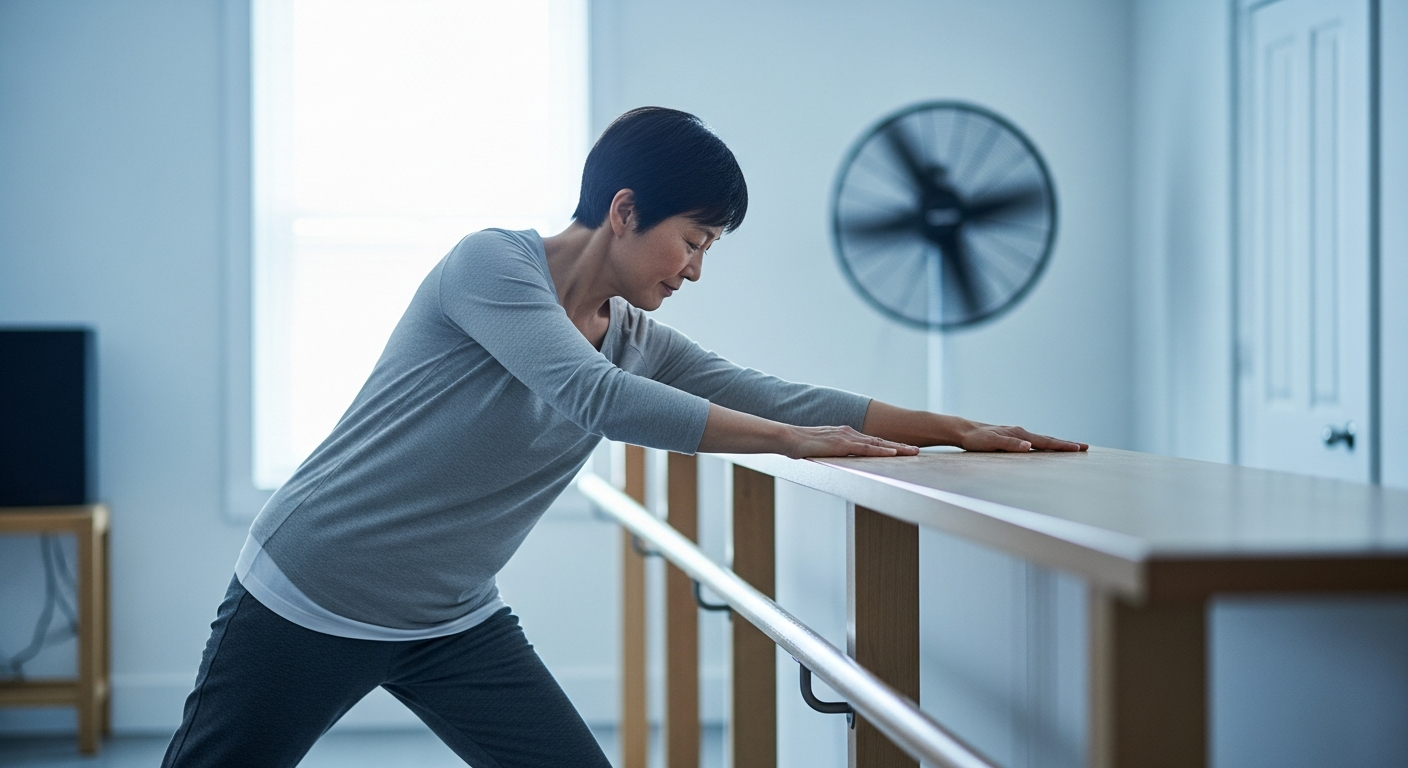
Keep it cool. Heat can worsen symptoms for many people with MS, even if only temporarily. Choose cooler times of day, cooler rooms, fans, light layers, and hydration. (8)
Stay safe. If balance is a concern, use a counter, sturdy chair, rail, or a partner nearby.
Go lower than you think you should. If you finish and feel like you could have done more, that is a win. Consistency beats hero days.
Adjust for flares and bad days. On low energy days, your win might be 3 minutes, gentle stretching, or a short walk inside.
If you have new or worsening symptoms, recent relapse, or medical restrictions, check in with your MS team before progressing intensity.
Your Call to Action to Be Successful…
To be connected and supported by your healthcare team when you are getting started:
When asked, your Access Code = MSGO1
References
Du, L., Xi, H., Zhang, S., Zhou, Y., Tao, X., Lv, Y., Hou, X., & Yu, L. (2024). Effects of exercise in people with multiple sclerosis: a systematic review and meta-analysis. Frontiers in public health, 12, 1387658. https://doi.org/10.3389/fpubh.2024.1387658
Proschinger, S., Kuhwand, P., Rademacher, A., Walzik, D., Warnke, C., Zimmer, P., & Joisten, N. (2022). Fitness, physical activity, and exercise in multiple sclerosis: a systematic review on current evidence for interactions with disease activity and progression. Journal of neurology, 269(6), 2922–2940. https://doi.org/10.1007/s00415-021-10935-6
Multiple Sclerosis, Quality Measurement Set. American Academy of Neurology. 2015. https://www.aan.com/siteassets/home-page/policy-and-guidelines/quality/quality-measures/14msmeasureset_pg.pdf?utm_source
Hvid, LG, Steenberg, JL, Roy, F, and Skovgaard, L. Outdoor walking exercise therapy improves walking capacity and well-being in persons with multiple sclerosis: a randomized controlled trial. Ann Phys Rehabil Med. (2025) 68:101985. doi: 10.1016/j.rehab.2025.101985. https://www.sciencedirect.com/science/article/pii/S1877065725000508?utm_source
MS Canada. The Guidelines, Physical Activity and MS. https://mscanada.ca/the-guidelines?utm_source
Canadian Society for Exercise Physiology (CSEP). Canadian Physical Activity Guidelines for Adults with MS (and related resources). https://csepguidelines.ca/wp-content/uploads/2020/11/CSEP_MS_PAGuidelines_adults_en.pdf?utm_source
Kim, Y., Lai, B., Mehta, T., Thirumalai, M., Padalabalanarayanan, S., Rimmer, J. H., & Motl, R. W. (2019). Exercise Training Guidelines for Multiple Sclerosis, Stroke, and Parkinson Disease: Rapid Review and Synthesis. American journal of physical medicine & rehabilitation, 98(7), 613–621. https://doi.org/10.1097/PHM.0000000000001174
National MS Society. Exercise and physical activity guidance and safety tips, including cooling and pacing.https://www.nationalmssociety.org/managing-ms/living-with-ms/diet-exercise-and-healthy-behaviors/exercise?utm_source