
Stress, Recovery and Building Resilience
Imagine spending hours building a model for a school project and watching part of it collapse just before you finish. Your first reaction might be anger, panic, disappointment, or the sudden urge to give up completely. Someone else might pause, look at what can still be saved, and begin rebuilding, while on another day you might respond that way too. The difference doesn’t necessarily mean one person is naturally stronger or better at handling problems. Sleep, movement, emotions, previous experiences, and the people around you can all influence the condition of your brain and body when a challenge happens. Stress management strategies matter because they can change that condition even when they cannot change the problem itself. The connection between managing stress and becoming able to recover from it is an important part of resilience.
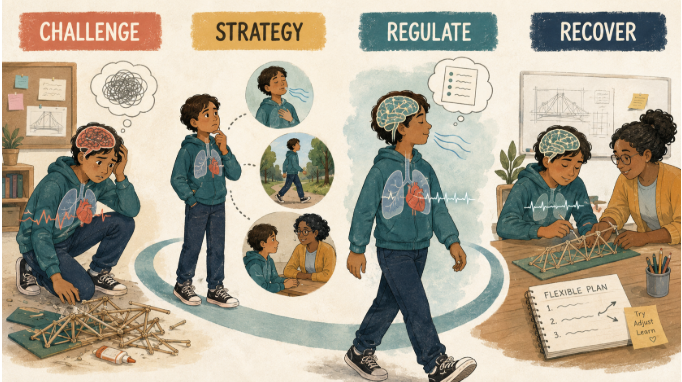
What Happens After the Problem?
Resilience is sometimes described as bouncing back, which can make recovery sound quick and simple. Real recovery is usually more complicated because resilient people can still feel angry, worried, disappointed, exhausted, or overwhelmed. Being resilient does not mean that a difficult experience has no effect on you or that you immediately return to exactly how you felt before. It means gradually finding ways to adapt, use available support, and continue moving forward after stress. Some challenges may become manageable fairly quickly, while more serious experiences can require much more time and help. The useful question is therefore not whether the experience affected you, because difficult experiences often do. A better question is what could help you recover and respond effectively from where you are now.
Stress Can Crowd Your Mental Space
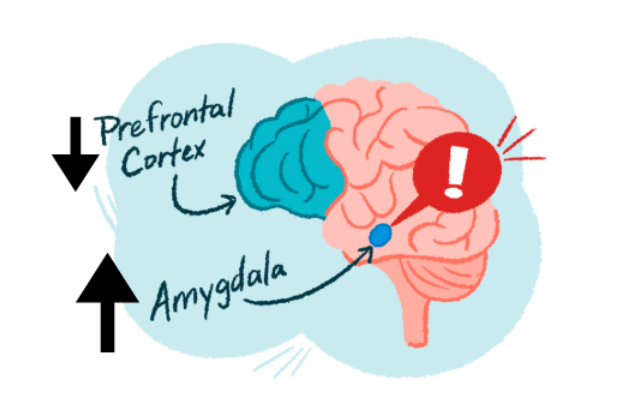
To understand why recovery strategies can help, it’s useful to look at what stress can do to thinking. You may have experienced a moment when you were so stressed that you forgot what you were about to do even though you knew the plan only a minute earlier. One ability involved in situations like this is working memory, which allows you to temporarily hold information in mind while you use it. Stress can make it harder to use this limited mental space effectively because attention becomes strongly focused on the problem. The more attention the stressful situation demands, the less attention may be available for planning, remembering instructions, or considering alternatives. This doesn’t mean that your thinking abilities have suddenly disappeared. It means those abilities can become harder to access while your brain is treating the stressful problem as the most important thing requiring attention.
Cognitive Flexibility Helps You Find Another Way
Stress can also make cognitive flexibility more difficult to use. Cognitive flexibility is your ability to shift your thinking, adjust a plan, consider another possibility, and move from one approach to another when something isn’t working. Imagine that the school project collapses and your attention becomes fixed entirely on the thought that everything is ruined. While your mind remains locked onto that conclusion, it can be harder to notice which parts are still usable or what could be rebuilt differently. A more flexible response might involve asking what can be saved, whether the plan can be changed, or whether another person can help. The problem itself hast disappeared, but your attention has moved from repeating the problem toward exploring possible responses. That shift can create more room for useful thinking when stress has made the situation feel impossible.
Think of Your Mind Like Carrying Boxes
A simple comparison can help explain why intense stress sometimes makes thinking feel more difficult. Imagine that you can comfortably carry two heavy boxes at one time and that those two boxes already use most of your available strength. If someone suddenly adds a third heavy box, the problem is not that you have become weak in that exact moment. You have simply reached the amount you can manage at once. Mental attention can work in a similar way because working memory has a limited capacity. When intense stress occupies much of that capacity, there may be less mental space available for planning, remembering, and considering solutions. The goal is not to prove that your mind should somehow carry unlimited boxes. It is to find ways to regulate, refocus, and create enough mental space to work with the problem more effectively.
Changing the State You Are In
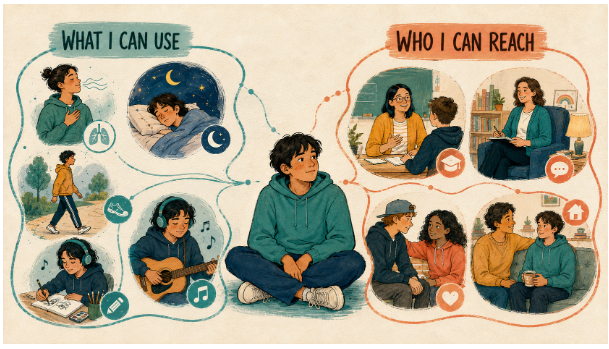
This is where stress management strategies can become useful because they may influence the state of your brain and body while you deal with a challenge. The strategy does not have to fix the actual problem to be helpful. A broken project remains broken after you breathe slowly, take a short walk, or speak with someone you trust. What can change is how activated, overwhelmed, or mentally stuck you feel when you return to the situation. If the feeling that you must react immediately becomes less intense, it may become easier to pause and organize your thoughts. You may then be better able to identify what the situation actually needs instead of responding only to the strongest emotion in the moment. Stress management therefore helps create conditions in which a more useful response may become possible.
Why Breathing Can Help
Breathing is a useful example because it normally happens automatically, but you can also change it intentionally. Slow and comfortable breathing can influence the autonomic nervous system, which helps manage automatic processes such as heart rate, breathing, and digestion. Different parts of this system help the body prepare for action and support settling and recovery afterward. Slower breathing does not erase anger, disappointment, fear, or worry, and it does not prove that everything is fine. It can, however, help some of the body’s activation begin to settle. When reacting immediately feels less urgent, you may find it easier to think about what happened and what to do next. The value of breathing is therefore not that it removes the challenge but that it can help change the condition in which you respond to it.
Regulation Does Not Mean Removing Emotion
Regulation is sometimes misunderstood as becoming completely calm or making an uncomfortable emotion disappear. A more useful way to think about regulation is becoming more able to choose your behaviour while an emotion is still present. You can be angry and still decide not to shout at someone. You can feel disappointed and still examine which parts of the project can be repaired. You can feel worried and still ask a teacher or friend for help. Emotions provide important information, but they do not have to make every decision for you. Stress management strategies can create enough space for you to notice what you are feeling without immediately acting on the strongest impulse. This ability to respond with greater choice is one of the ways regulation can support recovery.