Prehab Squat
Your body is about to do something extraordinary. Surgery and/or chemotherapy place stress on the body, and it responds by working hard to protect you, heal you, and help you recover.
In the weeks before surgery, the most powerful steps you can take are to move your body every day- walk, practice gentle strength exercises, and nourish yourself well.
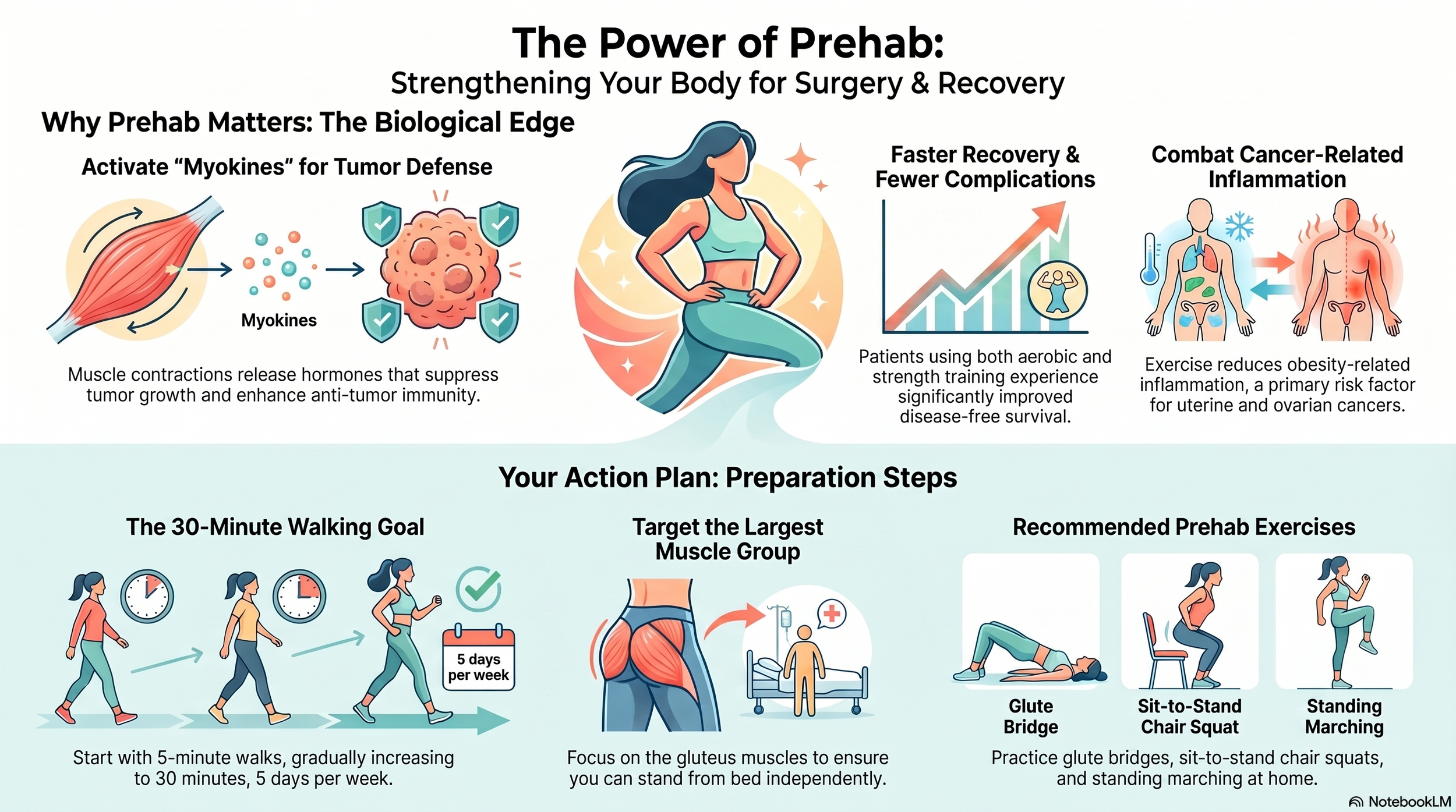
Very few women with cancer do structured exercise aimed at improving their health. Women who do both aerobic and resistance (strength) training have fewer complications, faster recovery, better quality of life, and, more importantly, improved disease-free survival.
We are changing this by providing support to help you become more physically active. Tiny steps over time change your trajectory. We are here to support you in making the changes you want and to celebrate your success.
Skeletal muscles are considered endocrine organs that release myokines (hormones) in response to muscle contraction, influencing our physiology and how we feel. Myokines directly suppress tumor growth, reduce cancer cachexia, and enhance anti-tumor immunity. Myokines improve obesity related inflammation, a known cancer risk, especially for women with uterine and some types of ovarian cancer.
Aerobic exercise, even 5 minutes beyond your baseline, can impact how you feel. Start with a 5-minute walk most days, and add a few more minutes each week until you reach 30 minutes a day, 5 days per week. This is the goal recomended by the American Cancer Society for the general population ( there is limited data for women with Gynecologic Cancers).
Adding resistance training will have the greatest impact in the few weeks leading up to surgery. Your gluteus muscle, the largest muscle in your body, is the target. The gluteus muscles’ most essential functions are powerful hip extension and pelvis stabilization during movement. Without strong gluteal muscles, standing up from a bed, climbing stairs, walking uphill, or standing on one leg without losing balance becomes difficult. Weakness in this muscle is associated with an increased risk of falls and a need for inpatient rehabilitation rather than discharge home. Simple exercises like glute bridges, sit-to-stand (Chair squats), and standing marching can noticeably improve your strength and stability before surgery.
Our nurses have learned the optimal way to do squats, coached by Mel, a certified fitness trainer and nurse practitioner. This is part of our recommended prehabilitation exercise program you can do at home.