

When the Body Doesn't Get Enough Recovery
A bear walks onto the trail in front of you. It looks at you. You look at it. A standoff? Your brain registers a threat. A big, annoying threat. Adrenaline surges. Your heart races. Your breathing quickens. Sugar enters your bloodstream, putting fuel within reach if you need to act. Your muscles tense and your attention locks onto the bear. Whatever you were thinking about thirty seconds ago has become spectacularly unimportant. Your stress response is preparing you to fight, flee, freeze or fawn. Fawning has some limitations here. There isn't much opportunity to apologize to the bear and smooth things over.
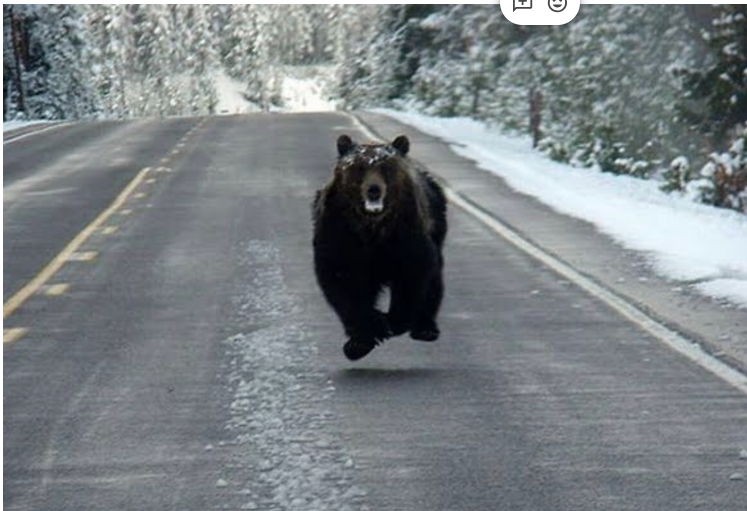
ACUTE STRESS RESPONSE??
Big Inquiry: What happens when a stress response designed for a few minutes keeps getting called back into action?
When the Bear Walks Away
Fortunately, the bear decides you aren't worth the trouble and wanders back into the forest. The threat is disappearing. Your body begins standing down too. Your heart rate starts returning toward normal. Your breathing settles. Your muscles relax. Stress hormones begin to decrease. Your attention widens again, although you are probably doing a few more shoulder checks. You might also quietly confirm that everything else survived the encounter, including your underwear. This is acute, or short-term, stress. A threat triggered a powerful response. That response helped prepare you to act. Then something equally important happened. The threat ended and your body had time to recover.
Exit: What changed inside your body when the bear appeared, and what changed again when it left?
What If the Stressor Doesn't Leave?
Not all stress walks back into the forest. Ongoing conflict, repeated bullying, persistent uncertainty or another difficult situation may still be there tomorrow. Sometimes one problem ends but another arrives before you have recovered. Sometimes a significant stressful event ends, but memories or reminders trigger the stress response again later. These situations are different, but they share something important. Your brain and body are being called on to respond repeatedly. They spend more time dealing with stress and less time back in their usual resting state. This is where ongoing, or chronic, stress becomes different from the bear encounter. The problem is not that your stress response worked. The problem is that your body is not getting enough opportunity to recover between repeated or prolonged demands.
Exit: Which matters more here: having a stress response, or how often the body has to keep returning to it? Why?
Brilliant for Minutes. Different for Months.
The racing heart, higher blood pressure, available fuel and narrowed attention all had a purpose when the bear was standing there. For a few minutes, that is brilliant biology. Repeated high stress without enough recovery is different. The cardiovascular system is repeatedly asked to work harder. Cortisol and other stress signals repeatedly change how energy is made available and used. Immune and inflammatory systems are affected too. The brain is also repeatedly operating under conditions designed to deal with high demand. Over time, that repeated biological workload creates wear and tear across the body. This does not mean a stressful week damages your health. It means the pattern matters. A system designed to help you respond for a short time was never designed to become the way your body regularly operates.
Exit: Why can the same stress response be useful for minutes but become a problem when repeatedly activated for months?
Your Developing Brain Is Part of the Story
Your brain is still developing through adolescence. Connections involved in attention, learning, emotions, behaviour and responding to stress are being strengthened and refined. Prolonged high stress without enough recovery and support can interfere with those processes. It may start showing up in ordinary life as disrupted sleep, difficulty concentrating, exhaustion, irritability, worry or feeling overwhelmed. Learning may become harder. Relationships may become harder too. For some people, prolonged or repeated stress, or a significant stressful event, contributes to mental health challenges. That outcome is not automatic. People differ. Previous experiences matter. Recovery matters. Coping skills matter. Supportive people matter. The important point is simpler: what happens repeatedly around a developing brain matters.
Exit: A student says, “Stress only affects how you feel.” What have you learned that would change their answer?
What Does “Tapped Out” Look Like for You?
Being stretched close to your capacity does not look exactly the same for everyone. Small things may suddenly bother you much more than usual. You may struggle to concentrate. You might feel exhausted, withdraw from people or react strongly to something you normally handle differently. Sleep may start changing. Patience may disappear surprisingly quickly. These are not proof that something is seriously wrong. They are information. They may tell you that your brain and body have been dealing with a lot and your available capacity is getting stretched. Recognizing those changes earlier gives you more opportunity to respond. Your stress response is automatic, but that does not mean you have no influence over what happens next. Rest, preparation, support and stress-management skills all change what you bring into the next difficult situation.
Exit: Think of one sign that tells you your capacity is getting stretched. What could help create some recovery before the next stressor arrives?
© 2026 All rights reserved.
G8 MWB3:3