

Stress: What Happens Inside You?
You're sitting in class when your teacher announces that the presentation order has changed. Instead of presenting last in two days, you're going first this afternoon. Before you've had much time to think about it, your heart is beating faster. Your stomach feels tight. Your palms are sweaty, and suddenly you're feeling that sense of dread, thinking about almost nothing except the presentation.
Early that afternoon, someone makes a rude comment to you in the hallway. What happens next could go several ways. You might immediately snap back, you might just walk away, you might find yourself unsure what to say, or you might try to smooth things over so things don't get worse. You probably didn't stop and choose from those four possibilities. Your reaction may have already started before you had much time to think about it.
The racing heart after the presentation order changed and that quick reaction in the hallway might not seem to have much in common. But underneath both is the same remarkable system built into your brain and body. It can react incredibly quickly when something feels important, uncertain, or threatening. This is your stress response.
So, How Does Your Body Do That?
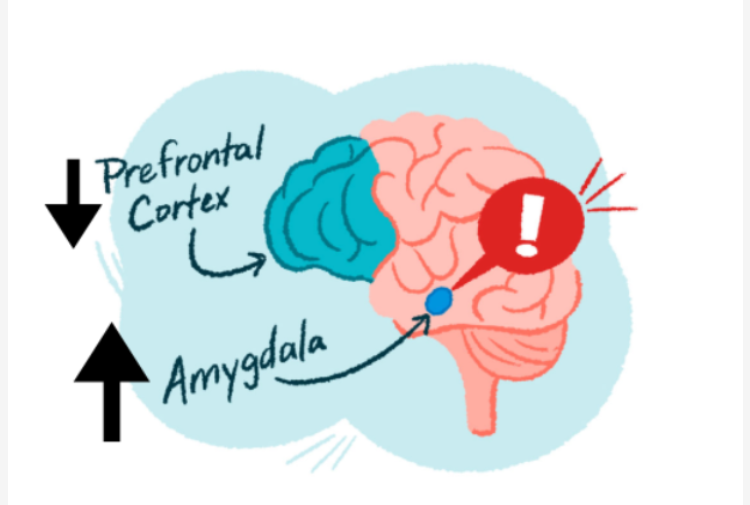
Your brain is constantly taking in information about what is happening around you and inside you. In the background, it is constantly evaluating what matters and whether something needs more of your attention. When it detects something that might be threatening or important enough to require your attention, it can activate your stress response before you have had much time to deliberately think through what is happening. A small area of the brain called the hypothalamus helps fast-track the message through your nervous system, essentially communicating, Hey, something needs your attention.
The part of your nervous system that quickly carries that message throughout your body is called the sympathetic nervous system. Adrenaline is released. Your heart beats faster. Your breathing changes. Your muscles become more ready for action. More energy becomes available, and even your digestive system changes what it is doing for a while (That is one reason stress can be felt in your stomach as butterflies, tightness or nausea). All this with one intention: to prepare you to take action
Your brain changes what it is doing too. Attention sharpens and begins shifting toward whatever seems most important at that moment. Think back to the surprise presentation announcement. A few minutes earlier, you might have been listening to a friend, thinking about lunch and following what was happening in class. Then you hear, You're presenting this afternoon. Suddenly, the presentation becomes the main thing occupying your thoughts. The teacher may continue talking, but a few minutes later you realize you haven't heard much of what was said. Your attention has narrowed its focus to the thing your brain has decided matters most.
That narrowing of attention makes sense when you consider why we have a stress response in the first place. For most of human history, a possible threat could require an immediate response. If something dangerous was approaching, noticing that threat while your heart, muscles and available energy became ready for action could help keep you alive. There wasn't much value in paying equal attention to everything else happening around you.
Your stress response is an ancient, hard-wired survival system. It is there to protect you. The trigger might be a real physical danger, something your brain perceives as threatening, a difficult social situation or an unexpected demand. The situations can be completely different, but the stress response is the shared common biological machinery underneath them.
Stress Is Not Always Bad
We sometimes talk about stress as though having any stress is unhealthy. It isn't that simple. Some activation of the stress response can make you more alert, attentive and ready to meet a challenge. Before a test, performance or even while working through something difficult to understand, that increase in alertness and attention can be useful.
But the amount of activation matters. Too little, and there may be very little urgency. With a moderate amount, you can feel alert, focused and ready. As stress becomes much stronger, your brain can give more and more attention to what it sees as the immediate problem. Everything else starts competing for what is left of your attention.
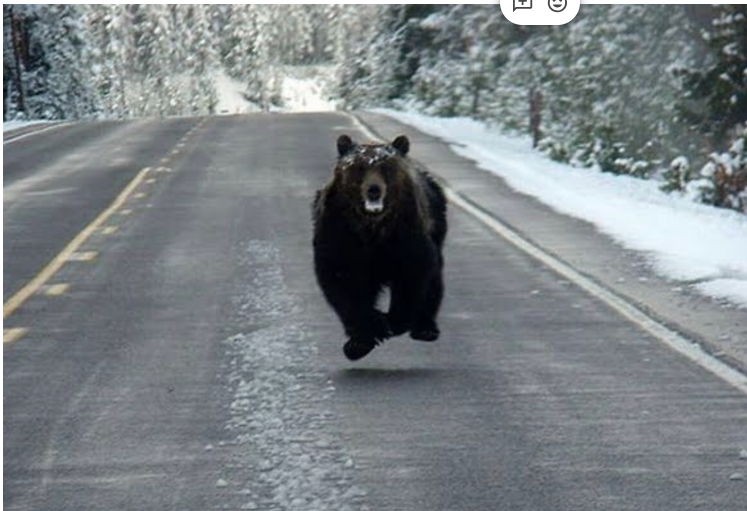
Question: Would you be more focused than if this were a little kitty cat running at you?
At very high levels of stress, it can become hard to think about much besides whatever is stressing you. If that problem is a bear suddenly appearing on the hiking trail, this makes a lot of sense. Your brain does not need you thinking about tomorrow's homework, what your friend said at lunch, or six different ways to interpret what the bear might be doing. There is one immediate problem, and almost everything else becomes background noise. Your stress response is helping prepare you to respond quickly, not to stop and carefully contemplate every possible option.
There is brain biology underneath that experience too. The prefrontal cortex helps you hold information in mind, weigh different possibilities, think flexibly and consider what you might do next. At very high levels of stress, those kinds of thinking can become more difficult as the brain gives priority to dealing with what seems most important right now. If the problem really is a bear, carefully considering six possible interpretations of the bear's intentions is still not especially useful.
And that brings us back to what happened in the hallway.
Fight, Flight, Freeze or Fawn
The biology hasn't suddenly changed just because the "threat" is social rather than a bear. Your brain still has to decide how important the situation is, and your stress response can still activate. But the response that follows is not fixed.
Four commonly described protective responses are fight, flight, freeze and fawn.
- Fight means moving toward or confronting what feels threatening, while
- Flight means getting away from or avoiding it.
- Freeze can mean becoming still, quiet or temporarily unsure what to do.
- Fawn describes trying to reduce the conflict by agreeing, pleasing or calming someone else because that feels like the safest response at the time.
Now the four possibilities from the hallway make a little more sense. Snapping back might be fight. Walking away could be flight. Finding yourself unable to say what you wanted could be freeze, while trying to smooth everything over might be fawn. Different reactions, but underneath them is the same stress-response system.
The biology is built in. The response is not a fixed response.
If the stress-response system is something we all have, why can the same situation feel manageable one day and overwhelming on another?