

Eating the Rainbow
Red, Purple, and Blue...What have you?
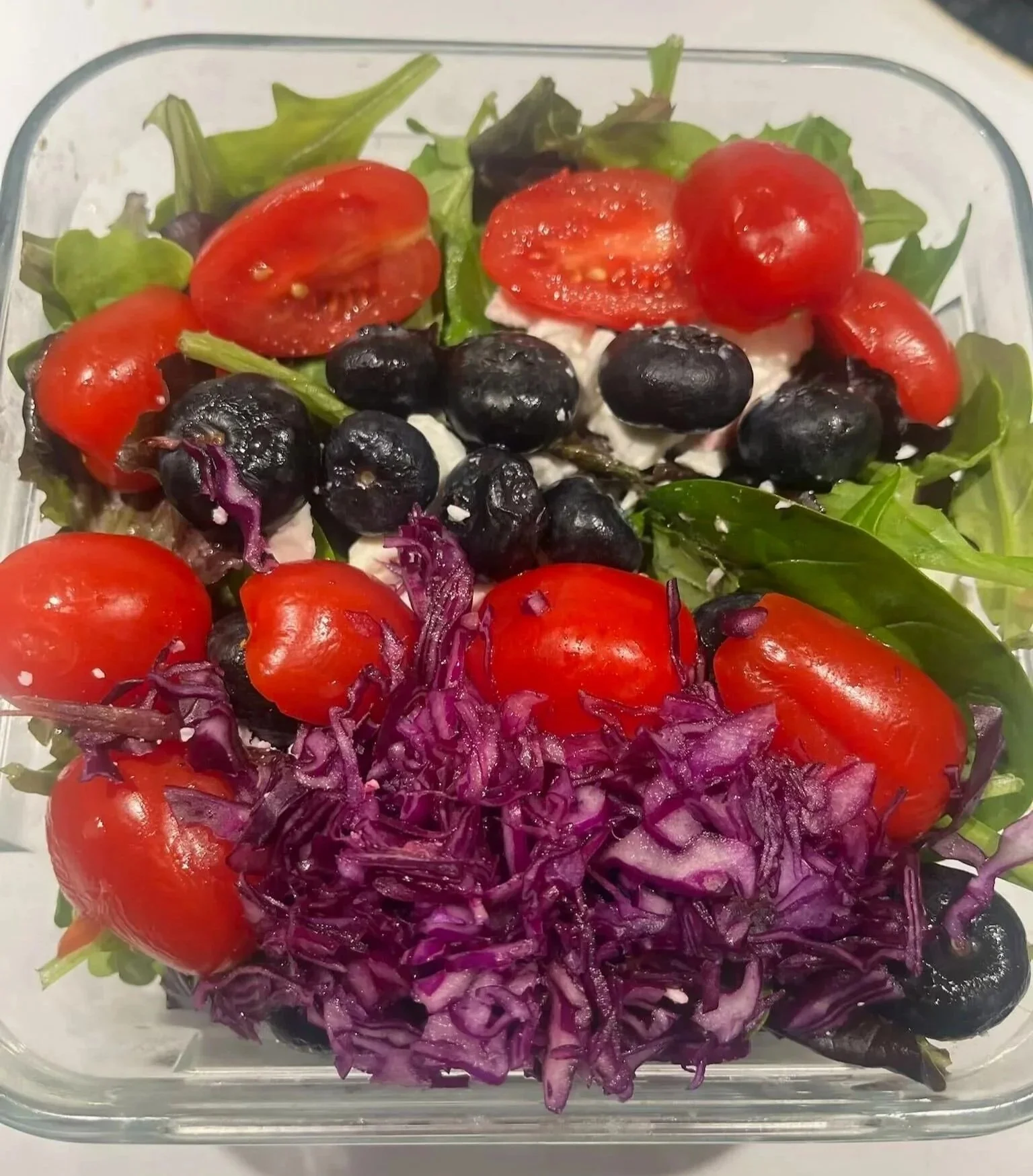
Preparation: The Kitchen Changes the Chemistry
Eating colourful whole foods is only part of the story. How you prepare them matters. Take tomatoes. Cooking tomatoes breaks down parts of their cellular structure and makes lycopene more available for your body to absorb. Add some extra virgin olive oil and you add fat, which helps your body absorb this fat-soluble compound. Turmeric gives us another example. Its best-known bioactive compound, curcumin, is poorly absorbed on its own, while piperine from black pepper substantially increases its bioavailability. Fermentation changes food again, as microorganisms transform compounds and create new ones before the food even reaches your gut. Chop it, crush it, cook it, ferment it, combine it with other ingredients: food preparation is chemistry. So put tomatoes in a pan with some extra virgin olive oil, add turmeric and a little black pepper, and something interesting is happening beyond making dinner taste better. Heat and preparation are changing the food matrix, while fat and other food compounds influence what becomes available for absorption and metabolism. That does not mean more heat is always better. Some compounds become more available with cooking, while others are reduced by prolonged or excessive heat. How we prepare food changes what our bodies ultimately receive from it.
With the whole food experience, you are not eating lycopene, carotenoids, polyphenols or fibre in isolation; you are eating a biological package whose components interact with your body and with each other in a very meaningful way.
You Cannot Buy This
There is also something important about preparing food yourself that does not come in a bottle, supplement or package. Give yourself 15 minutes in the kitchen and you become a bit of a chemist. You chop, crush, heat, mix and combine ingredients, changing flavour, texture and chemistry as you go. You also begin to understand food differently. A tomato is no longer just “healthy.” You start to know what is in it, what works alongside it, and why the way you prepare it matters. There is satisfaction in that. You made something. You smelled it cooking. You adjusted it. You tasted it. Perhaps you shared it with somebody else. We spend a lot of time talking about nutrients as though health comes from extracting the right chemical and putting it into a capsule. Whole food is far more interesting than that. Fifteen minutes preparing your own food gives you something you cannot simply buy: a growing understanding of food, some ownership over what you eat, and the satisfaction of creating it yourself.
What You Get
You are not eating lycopene, carotenoids, polyphenols or fibre in isolation. You are eating a complex biological package whose components interact with your body, with how you dress it up and with each other. That tomato contains far more than lycopene. Along with its vitamins, minerals, fibre and other phytochemicals, it delivers compounds that influence digestion, absorption and metabolism. Some carotenoids contribute to vitamin A production and healthy vision, while other plant compounds interact with biological processes involved in blood vessel function, inflammation and cellular protection. But what reaches your tissues depends on more than what was originally in the food. The food matrix, how you prepared it, what you ate alongside it and especially the microorganisms living in your gut all influence what your body ultimately receives. Your gut microbiome is not simply a collection of bacteria waiting for food to pass by. It is an active participant in the chemistry. Certain fibres feed intestinal microorganisms, which produce short-chain fatty acids involved in maintaining the intestinal lining and regulating metabolic and immune functions. Many polyphenols reach the large intestine, where microorganisms transform them into smaller compounds, some of which are absorbed and enter your circulation. The relationship works both ways: what you eat influences your microbial community, and that community influences what your body gets from what you eat. It is an ongoing biological partnership, shaped by what you put on your plate day after day. That is why eating the rainbow is not about finding one extraordinary compound or having the occasional colourful meal. It is about consistently providing your body and its microbial partners with a diverse collection of compounds that work through different, often interconnected biological pathways.
We will focus on the other colors of the rainbow and other neat facts in the next few weeks.
References
-
Aguilera JM. The food matrix: implications in processing, nutrition and health. Crit Rev Food Sci Nutr. 2019;59(22):3612-3629. doi: 10.1080/10408398.2018.1502743. Epub 2018 Sep 10. PMID: 30040431.
Excellent read. Aguilera explains that nutrients behave differently within a food's physical structure than they do in isolation. The matrix influences digestion, bioavailability and physiological responses. -
Edwards CA, et al. Polyphenols and health: Interactions between fibre, plant polyphenols and the gut microbiota. Nutr Bull. 2017 Dec;42(4):356-360. doi: 10.1111/nbu.12296. Epub 2017 Nov 10. PMID: 29200959; PMCID: PMC5698720.
Plant fibres and polyphenols interact with intestinal microorganisms, which metabolize these compounds into other biologically active substances. The microbiome is not simply receiving nutrients; it participates in transforming them and through this process builds messaging to several functions in the body and mind. The gut-everything connection! -
Zhang J, Wang H, Ai C, Lu R, Chen L, Xiao J, Teng H. Food matrix-flavonoid interactions and their effect on bioavailability. Crit Rev Food Sci Nutr. 2024;64(30):11124-11145. doi: 10.1080/10408398.2023.2232880. Epub 2023 Jul 10. PMID: 37427580.
Examining interactions between flavonoids and proteins, carbohydrates, lipids and minerals, these interactions influence how compounds become available for absorption and how the microbiome metabolizes them. - Rainbow Plate, by Australian GP Dr. Preeya Alexander. (I love this book. We modify the book to make it digestible for our daycare children).
- Pierre Learns to Eat a Rainbow, written by Australian paediatric dietitian Carin Clegg. (Another fav…)
- Weaver CM, Givens DI. Overview: the food matrix and its role in the diet. Crit Rev Food Sci Nutr. 2025;65(30):6880-6897. doi: 10.1080/10408398.2025.2453074. Epub 2025 Feb 4. PMID: 39905830.
Dr Peter Rawlek, MD
© 2026 All rights reserved.
LS-Weekly