
Food Literacy: How Knowing More About Your Food Helps You Stay Healthy
Reviewed by Dr. Scott Rollo, PhD & Dr. Peter Rawlek, MD
Have you ever wondered what happens to your food before it lands on your plate? - It’s more than coming from the fridge
Understanding where food comes from, how it’s prepared, stored, and even the cultural stories behind it is part of food literacy. Food literacy goes beyond knowing what’s “healthy” — it also includes food safety, respecting cultural food traditions, and learning how food is grown or made. This knowledge helps you make choices that keep you healthy and connected to your food.
Food Safety: Protecting Yourself from Illness
An important part of food literacy is knowing how to handle food safely to prevent contamination and illness. Simple habits can make a big difference:
Wash your hands before and after handling food.
Prevent cross-contamination: Keep raw meats separate from foods you eat raw, like fruits and vegetables.
Cook and reheat food properly: For example, make sure chicken is cooked all the way through with no pink inside.
Store food correctly: Refrigerate leftovers within two hours to stop bacteria from growing.
Think about a time when you ate something that tasted “off” — chances are it wasn’t stored or handled properly. Following food safety habits helps you avoid getting sick and keeps your food fresh.
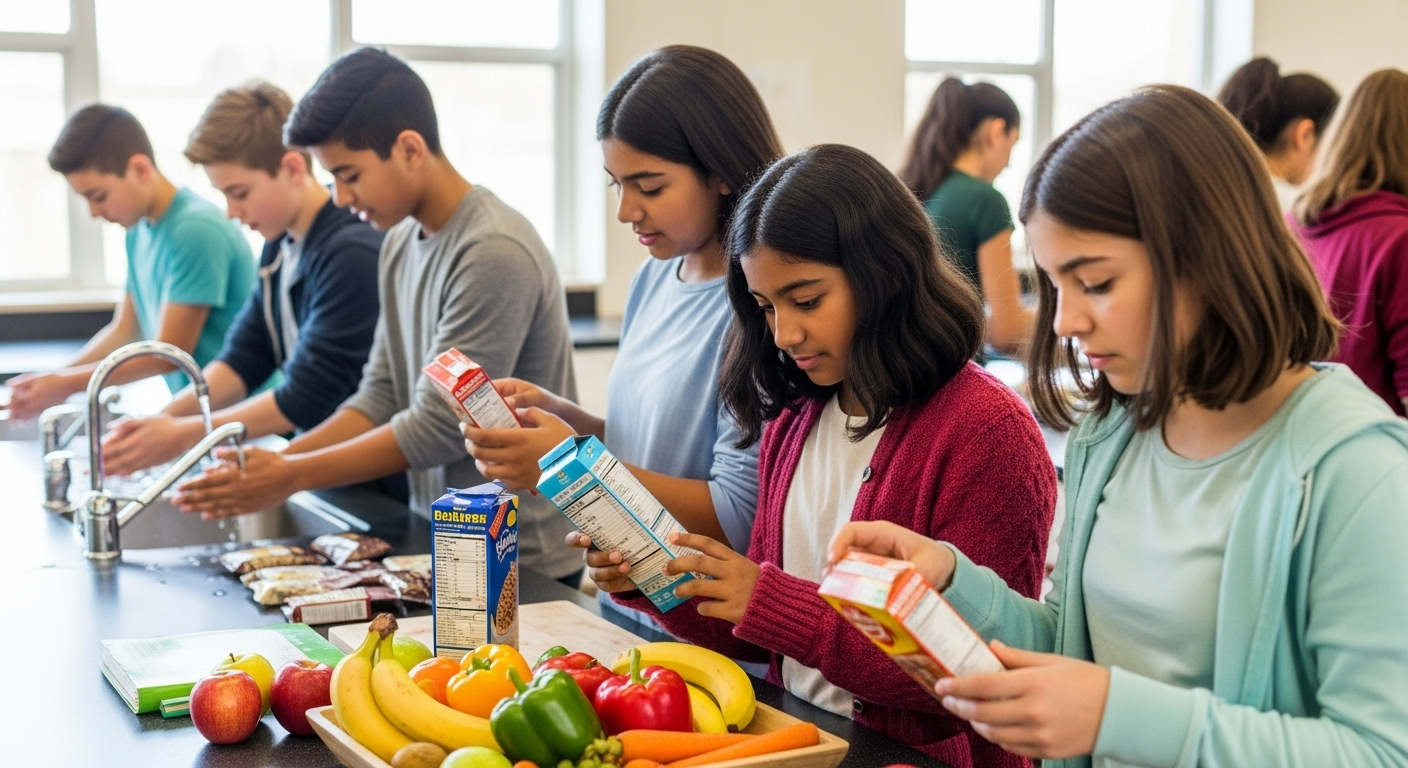
Students learning about food safety and culture, washing hands, reading labels, and exploring fresh foods in a kitchen setting.
Food Additives: What’s Really in Your Food?
Food additives help with taste, texture, and keeping food fresh longer. Some additives are natural—like salt that preserves food, or lemon juice that stops fruit from browning. Others are artificial, such as food colourings or sweeteners.
Not all additives are bad. For instance, vitamins added to cereal can boost nutrition. Being food literate means paying attention to ingredient labels so you understand what’s in your food and why it’s there.
Fresh vs. Commercial Foods
Have you noticed how a strawberry picked fresh from a garden tastes sweeter than one from a store? Foods harvested directly from the earth absorb nutrients from the soil, which often improves their taste and nutritional value.
Commercially processed foods, like packaged snacks, are convenient but usually go through changes that affect their natural quality. They often contain more additives to stay fresh or look appealing. Understanding these differences helps you make choices—maybe grabbing a fresh apple instead of a sugary fruit roll-up for a snack.
The Role of Culture in Food Choices
Culture plays a big role in what we eat. Ingredients, cooking styles, and mealtime traditions vary worldwide, shaping our relationship with food.
In Japan, meals often focus on balance with rice, fish, and vegetables.
In Mexico, beans, corn, and chili peppers are staples, with food often bringing families together.
Recognizing cultural food traditions helps you appreciate diversity, try new foods, and connect with your own food heritage.
Reflective Prompts
Take a moment to think:
How confident am I in handling and storing food safely?
How often do I read ingredient labels to understand what’s in my food?
What foods from my culture do I enjoy, and what new foods would I like to explore?
Flexible Classroom and Home Activities
Practice reading and comparing ingredient labels on different foods.
Research food safety rules and create a poster or infographic.
Explore cultural food traditions by sharing recipes or tasting foods from diverse cultures.
Food literacy is a life skill—knowing how your food is made, handled, and shared helps you make healthier, safer, and more meaningful choices every day.