
The Bear Didn't Give You Time to Warm Up
You are sitting comfortably in a chair when someone tells you to get up and sprint as fast as you possibly can. No warning. No jogging first. No practice run. Your muscles have gone from doing almost nothing to being asked for maximum speed in seconds. It’s going to take time to get moving.
Well, add a bear.
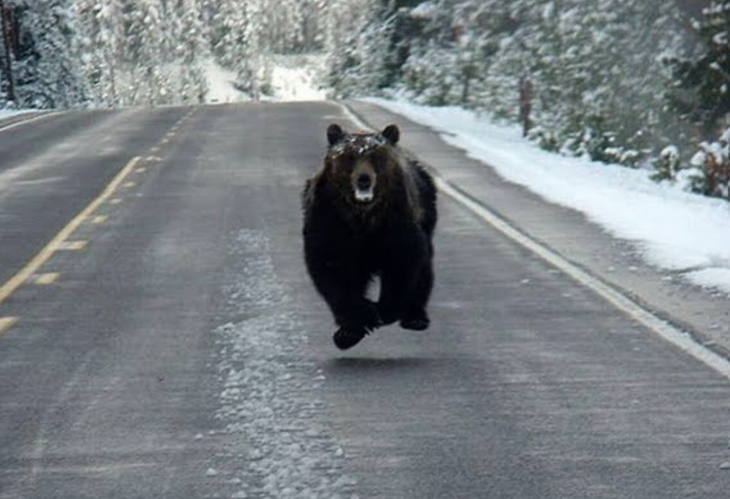
Photo Credit: http://www.whitewolfpack.com/
I don’t believe they’re giving you time to warm up?
Immediately, you are probably going to give sprinting a serious attempt. Your brain is firing off rapid signals to your muscles, stored energy becomes available, and your heart and breathing accelerate. Your body is remarkably good at responding when it has to. Unfortunately, the bear has apparently declined to provide a five-minute warm-up period.
Fortunately, basketball, soccer, climbing and PE usually provide more notice than bears. That gives you something useful: time to prepare. And once you look inside the body, a warm-up turns out to be doing much more than its name suggests.
Your muscles can start before everything else catches up
The moment you sprint, your working muscles suddenly need much more energy. During intense exercise, blood flow to those muscles can eventually increase to around 20 times its resting level, delivering far more oxygen and fuel to support the work. But your muscles can produce powerful movement almost immediately. Getting your heart, breathing, circulation and muscle cells working together at much higher levels takes longer, so during those first moments, some of the systems supporting your muscles are still catching up.
A progressive warm-up gets that process underway before the hardest work begins. Heart rate and breathing rise, more blood reaches working muscles, and the machinery inside muscle cells that uses oxygen to release energy becomes more active. By the time the activity gets harder, several systems are already moving toward the demands ahead.
That is quite different from sitting to GO!
But warming up isn't just about energy
Suppose your game requires you to sprint, stop quickly, cut sideways, jump, land and immediately move again. Would slowly jogging around the gym really prepare you for all of that?
Not completely. Think about landing after a jump. Your brain and nerves have to tell your muscles when to tighten, how much force to use and how to keep you balanced as your feet hit the ground. This brain, nerve and muscle connection is called neuromuscular: neuro refers to the nervous system and muscular to the muscles. A neuromuscular warm-up lets this system practise movements before you have to perform them faster, with more force and while reacting to everything happening around you.
What you practise depends on what you are about to do. Running steadily forward creates different movement demands from basketball or soccer, where you may sprint, stop, turn, jump, land and react to another player within seconds. Climbing creates another challenge, requiring your brain, nerves and muscles to coordinate grip, balance, body position and force while figuring out where your next hand or foot should go.
Instead of only warming tissues, you are giving your brain and body a necessary practice round before adding full speed, greater force, other players and the small inconvenience that the game does not stop while you decide where your feet should go.
This matters for safety. Research in youth sports has found that well-designed neuromuscular warm-up programs can substantially reduce injuries when practised consistently. That does not mean warm muscles magically become injury-proof. A good warm-up also prepares how you move, rehearsing movements you will soon have to control at greater speed and force.
There is another part of your brain that needs to arrive. You can physically walk into PE while your attention is still sitting in math class, replaying something from lunch or thinking about what is happening after school. The warm-up gives your attention time to catch up with your body and begin noticing what matters now: people are moving, equipment is being used, instructions matter and your decisions can affect other people's safety as well as your own.
Safety also depends on everyone else
That is why etiquette and sportsmanship are also safety skills. Waiting until an area is clear before swinging equipment, following the rules, respecting another person's space and stopping when required make people's actions more predictable. Predictability becomes rather valuable when twenty-five moving humans have been supplied with balls, racquets and assorted other objects.
Sportsmanship matters too. Competition and frustration do not disappear because a game has rules. Respecting opponents and officials, following those rules and controlling your behaviour when something does not go your way help keep competition from becoming unsafe.
Coming back down
Eventually the activity ends, but your body does not instantly return to rest. Your heart and breathing remain elevated, blood continues flowing strongly through working tissues, and your body is releasing the heat produced during exercise. Lower-intensity movement allows these responses to settle progressively.
A cool-down does not need imaginary superpowers to be useful. Research does not show that it automatically prevents injuries or next-day muscle soreness, and the old idea that you need to “flush out lactic acid” oversimplifies what lactate actually does. A cool-down provides a gradual transition from harder activity toward rest. Your attention gets an ending too, moving out of the intense focus of a game, race or climb and toward whatever comes next.
So what are you really warming up?
Your temperature, certainly. But that is only the beginning. You are preparing your cardiovascular and metabolic systems for increasing energy demands, your muscles and movements for the forces ahead, your nervous system to coordinate those movements, and your attention for the environment you are entering. You are getting your body and brain ready for action.
And the bear? It wasn't planning to stop and give you five minutes to warm up. For the bear, it was already game on. A game won't stop for you either. Once it begins, your body and brain are being asked to perform now. The warm-up is the time you have to prepare before those demands arrive.
Then, when it is over, the cool-down helps make the journey in the other direction.
Which leaves a bigger question: If warming up is really about preparing yourself for what you are about to enter, why would that idea end when you leave the gym?