
Protecting Your Mental Health: Healthy Habits to Help You Feel Your Best
Reviewed by Dr. Scott Rollo, PhD & Dr. Peter Rawlek, MD
Growing up as a teenager can be exciting but sometimes hard. You’re changing, learning new things, and figuring out who you are. This can sometimes feel stressful or overwhelming. The good news is that there are simple habits you can use to protect your mental health, feel more confident, and stay balanced.
What Are Protective Strategies?
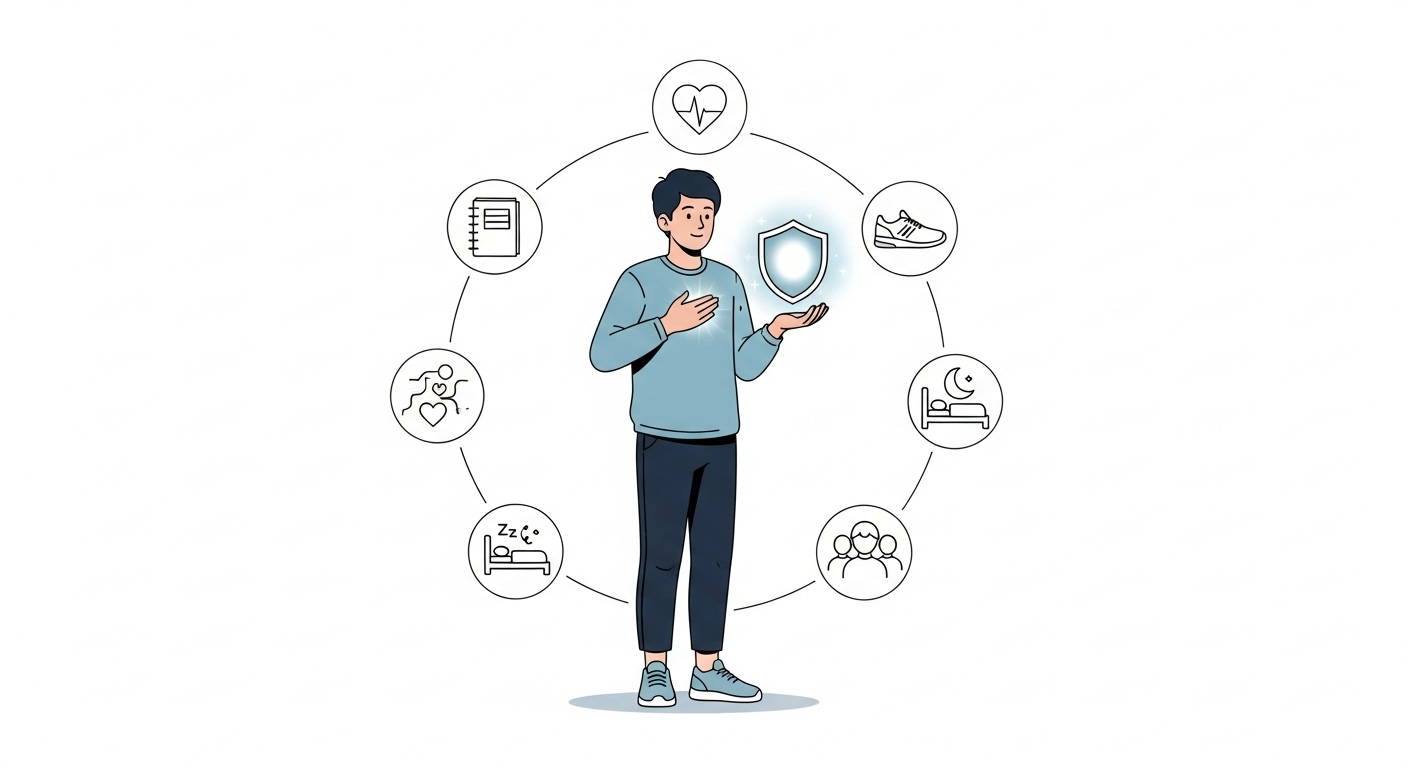
Protective strategies are healthy habits and skills that help you take care of your feelings and thoughts. They include:
Self-awareness: Understanding how you feel and what you’re good at.
Self-management: Doing things that help you stay calm and strong.
Using these strategies helps you handle stress better and feel good about yourself.
Self-Awareness: Knowing Yourself
Self-awareness means noticing your emotions and strengths. Here are some ways to practice it:
Name your feelings: When you feel upset or worried, try to say what you’re feeling. For example, “I’m nervous about the big test” helps you understand and calm down.
Try mindfulness: Take a moment to focus on your breathing or what’s around you. This can help you feel calmer if you’re stressed.
Think about your day: Write in a journal or just think about what made you happy or upset. This helps you see what’s going well and what’s hard.
Recognize your strengths: Maybe you’re a good listener, a fast runner, or creative in art. Knowing what you’re good at boosts your confidence.
Set goals: Having a goal, like joining a club or getting better at a hobby, gives you something positive to work toward.
Self-Management: Taking Care of Yourself
Self-management means doing things that keep your mind and body healthy:
Stay organized: Use a planner or checklist to keep track of homework and activities so you don’t feel overwhelmed.
Practice deep breathing: When you feel stressed, breathe in slowly through your nose and out through your mouth a few times to help calm down.
Be active: Moving your body—like walking, playing sports, or dancing—can make you feel happier.
Connect with others: Spend time with friends or family who make you feel supported.
Get enough sleep: Try to sleep 8 to 10 hours every night. A regular bedtime helps you feel energized and ready to learn.
Eat well: Healthy foods give your brain the fuel it needs to focus and keep your energy steady.
Break tasks into steps: If a project feels big, break it down into smaller parts. Every small win will boost your confidence.
Building Self-Esteem: Feeling Good About You
When you understand yourself and take good care of your mind and body, you build self-esteem. That means you appreciate who you are, feel proud of your strengths, and know you matter just as you are.
Real-Life Example:
Imagine you have a big project due. You feel stressed and nervous. Using protective strategies might look like this: you break the project into smaller steps, plan when to work on each part, take deep breaths when you feel overwhelmed, and talk to a friend or family member for support. By doing this, you feel more in control and confident.
Time to Think:
What’s one thing you’re good at and proud of?
Which healthy habit could you try this week to help your mind or body?
How do you feel when you take time to care for yourself?
The Bottom Line
Taking time to understand yourself and building healthy habits helps protect your mental health. It makes you feel stronger, more confident, and ready to face whatever comes your way.