
APPLYING YOUR FOOD LABEL WISDOM
Reviewed by Dr. Scott Rollo, PhD & Dr. Peter Rawlek, MD
1. Drink Smarts: Bottles That Bite Back
Thirsty after gym class? That “sporty” bottle might seem harmless—but it could pack a sugar punch. Learn how to check the label so your drink fuels you instead of crashing you.
Meet Liam.
He flips the bottle.
Serving size: 250 mL.
Bottle size: 500 mL.
That’s 2 servings.
Sugars %DV: 14% per serving.
Wow! The whole bottle = 28% DV sugars. (that’s over ¼ of his daily requirements)
Sneaky.
Juice time. Maya grabs “100% orange juice.”
Sounds healthy. Still free sugars. (juice squeezed out, minus the fiber)
No fiber to slow down the rapid absorption of sugar in their stomach .
Fast spike = fast crash.
Water is king.
Let food be where you get nutrients and calories.
Drinks? Mostly water.
Why it helps your brain/body
Fewer sugar spikes = steadier energy, better focus, calmer mood.
Consider: Water hydrates without extra sugars.
Consider: Milk or fortified alternatives add protein and nutrients when you need them—with food.
Try it today (one micro-action)
Pick two drinks. Match serving sizes.
Choose lower sugars %DV.
Sip water first. If juice, pour a small glass and have it with food.
Self-check
Label on the bottle shows 2.5 servings, 10% DV sugars per serving. Whole bottle = ?% DV
Why does whole fruit beat juice for steady energy?
Words to know
Serving size — the amount all numbers use.
% Daily Value (DV) — your day meter per serving (5% = a little, 15% = a lot).
Free sugars — fast sugars without fiber.
Single-serve — package meant for one serving (still check!).
Ingredients list — parts listed most to least.
2. Cereal Showdown: The Serving Size Trap
Big bowl. Tiny label. Who’s tricking who?
Meet Zara. Two boxes.
Cereal A: ¾ cup (30 g), sugars 9 g, fiber 2 g.
Cereal B: 1 cup (55 g), sugars 9 g, fiber 5 g.
Same sugars on paper.
But Cereal B’s serving weighs more.
So… Calculate what is in 55g to 30 g (to compare to Cereal A), then Cereal B’s sugars ≈ 5 g for 30g. (9g sugar/55g serving:: Xg sugar/30g serving; X =?)
And also, Cereal B for a comparable 30g serving also has more fiber.
Cereal B: Better for fullness!
Rule: ALWAYS Compare the same amount. Expect to use your math and fractions!
EITHER Match serving sizes or match grams (g).
Then use the rule: %DV: 5% or less = a little. 15% or more = a lot. Some ingredients you prefer a lot of and some you don’t prefer much of…
Remember: %DV is a day meter, not a goal. It’s for quick compare, do not “aim for 100%.”
Why it helps your brain/body
Right-size info = real choices.
Higher fiber + enough protein = steady energy and fewer crashes.
Lower sugars + sodium = clearer head for class.
Try it today (one micro-action)
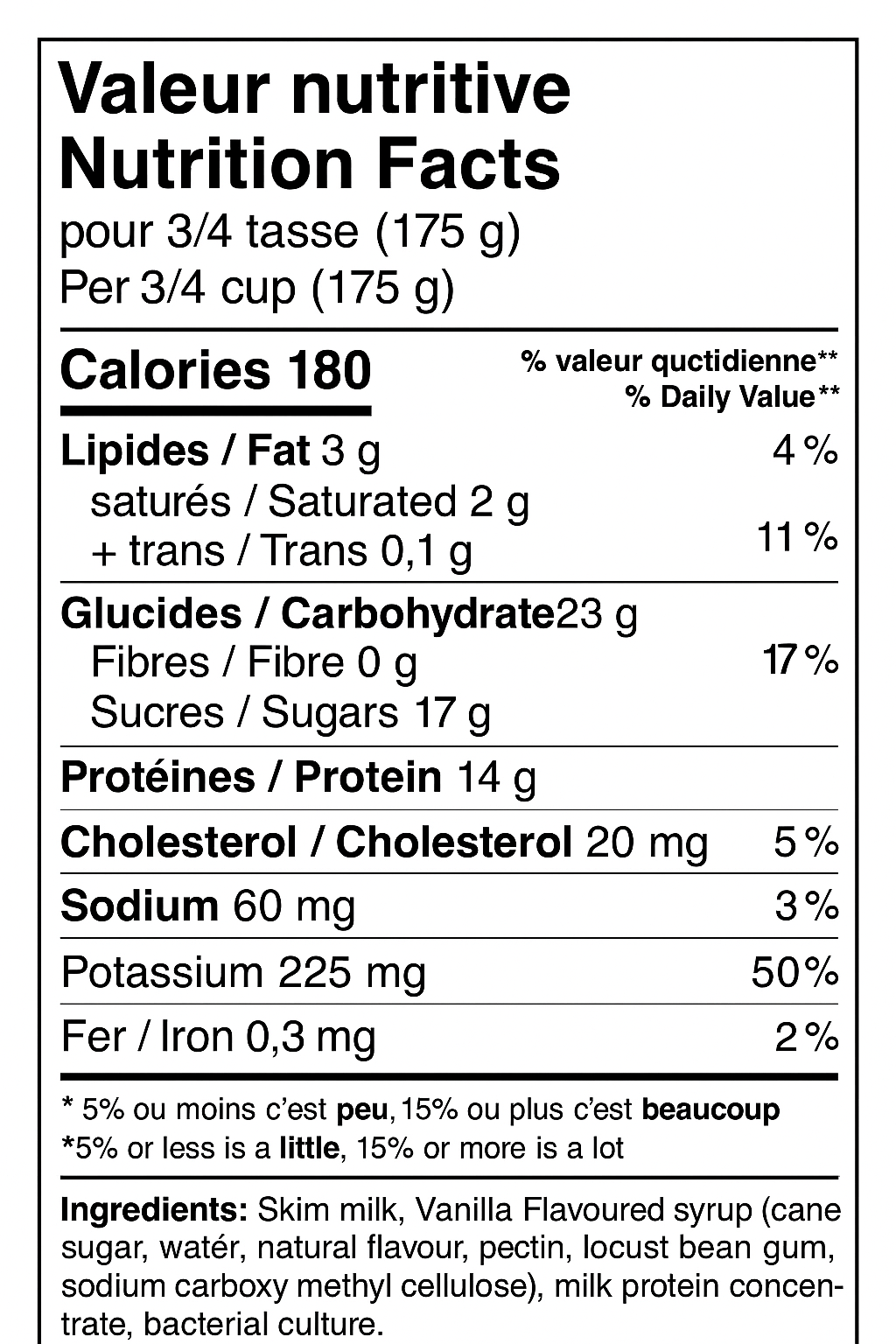
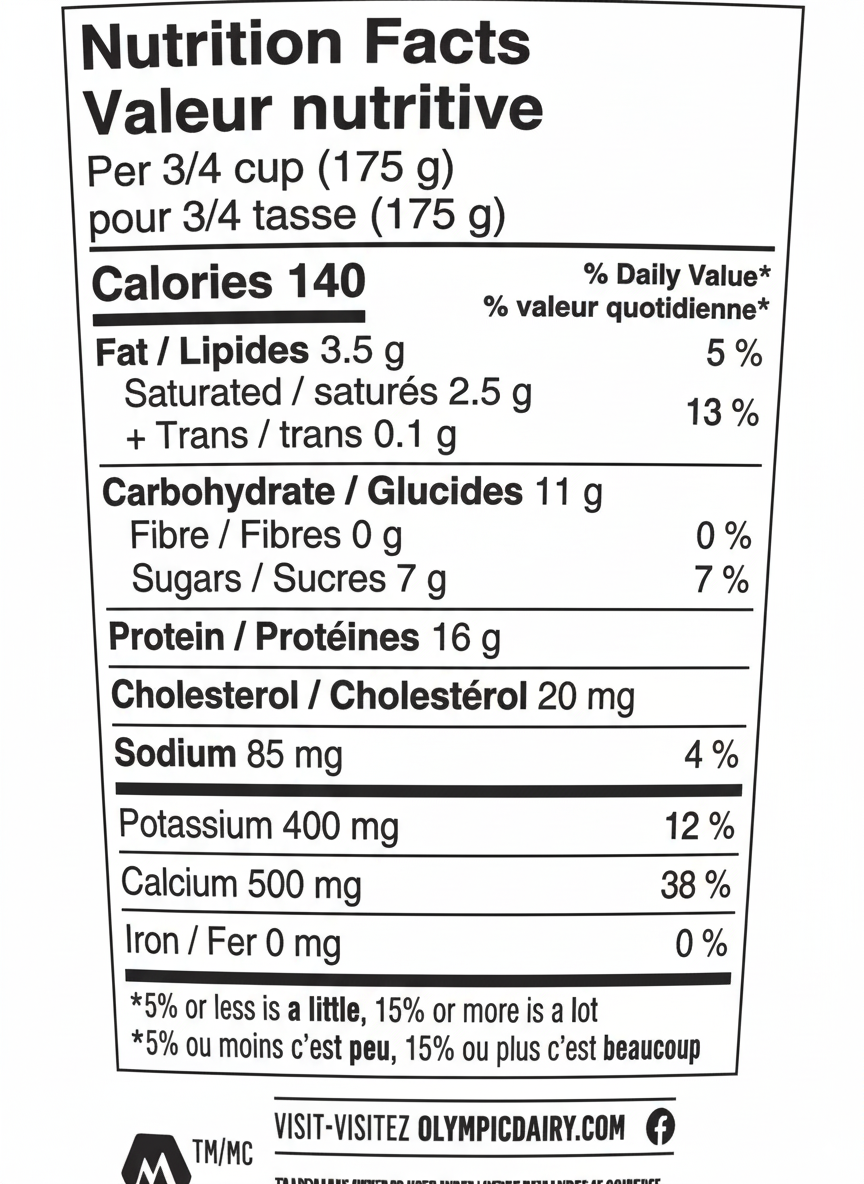
Comparing yogurt vs. kefir on cereal?
Match the amount (e.g., 175 g vs 175 g).
Pick higher protein, higher fiber, lower sugars %DV.
Self-check
Two cereals list 9 g sugars, but one serving is 30 g and the other 55 g. Which is sweeter per gram?
Your usual bowl is 2 servings. What happens to sugars and sodium?
Words to know
Grams (g) — serving weight for fair comparisons.
% Daily Value (DV) — how much per serving (5% = a little, 15% = a lot).
Fiber — helps fullness and digestion.
Protein — helps muscles and steady energy.
Sodium — salt in foods; keep it lower.