

Eat the Rainbow: Become a Variety Detective
Big discovery: Different foods bring different things. Variety helps us get more of them.
1. Is There One Perfect Food?
Suppose you had to choose one food that gave your body everything it needed. What would you choose? An apple brings useful things. So do eggs, beans, oats, carrots, yogurt and many other foods. But no single everyday food gives your body everything it needs in the right amounts. Different foods bring different combinations of carbohydrate, protein, fats, vitamins, minerals, fibre, water and plant compounds. That is why variety matters. You do not need to find the perfect food. Eating different foods gives your body access to different things.
Try it: Look at three very different whole foods. What tells you immediately that they are not simply three versions of the same food?
2. Why Eat a Rainbow?
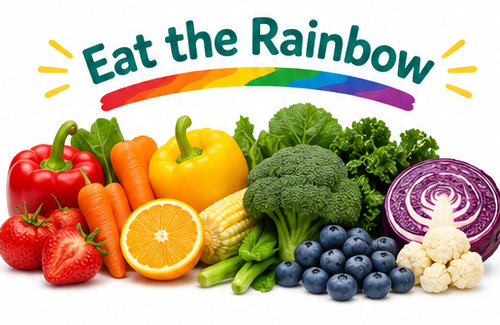
Blueberries, carrots, spinach, tomatoes, purple cabbage and cauliflower look dramatically different. Their colours come from compounds the plants make as they grow. Different plant foods also bring different mixtures of nutrients, fibre and many other naturally occurring plant compounds. You do not need to memorize what every colour does. A rainbow of colours is a clue to variety. Choosing different naturally coloured plant foods is one simple way of bringing more variety into what you eat.
Try it: A snack has strawberries and an apple. You can add two more whole foods. Your options are raspberries, apple slices, grapes or carrots. Which two choices add the most obvious new variety? What clue helped you decide?
3. There Is More Inside Than You Can See
Cut open a blueberry, bean or apple. You cannot see most of what makes that food interesting. Inside are nutrients, water, fibre and many naturally occurring compounds. They are not floating around separately. They exist within the structure of the food itself. A whole food is an amazingly complicated package built by a living thing. What you see on the outside is only the beginning of what is inside.
Try it: Choose two very different whole foods. What can you see, feel or taste that tells you they are different foods even before you know exactly what is inside them?
4. Different Food, Different Package
An apple and a bean are both whole foods, but what they bring is different. So are oats, carrots, lentils, blueberries and almonds. Different plant foods contain different amounts and combinations of carbohydrate, protein, fats, vitamins, minerals, fibre and plant compounds. This takes us back to our big idea: different foods bring different things. Your body does not need you to find one perfect food. It needs you to eat a variety of foods.
Try it: Look at the whole foods you have eaten so far today. Where have you already found variety? Where could another different whole food fit?
5. Now Look at the Whole Meal
A meal does not need every food in the kitchen. It does need us to think beyond just one food. Perhaps there are vegetables or fruit, a whole-grain food and a protein food. They can be separate or mixed together in soup, curry, tacos, sandwiches or stir-fry. There are many ways to build variety. A food detective asks a simple question: What different foods are already here, and what could I add that brings something different?
Try it: Look at a meal you know well. Identify the different foods already there. Then choose one food you could add that brings something different to the meal.