
Box Breathing: Everyone’s Parasympathetic On-Button
Turning on everyone’s body’s built-in calm system
Reviewed by Dr. Scott Rollo, PhD and Dr. Valena Wright, MD
So, let's talk about directly activating the parasympathetic nervous system (vagus nerve), your body’s natural calm switch. How? Using the tried and tested 4 by 4 box breathing technique. A simple prescription, recommended by your district doctor for all ages to directly activate that body and mind calming response pause button.
But hold it! There is a key point that is often missed, that is, how you breathe. This really matters.
The inhale determines how effectively you switch on the parasympathetic system.
Done well, this is not just calming, it is a direct physiological shift in how your system is operating.
Let's dig into this...
Box Breathing: Turning On Your Body’s Calm System
1. What is 4 × 4 Box Breathing?
4 × 4 box breathing is a simple breathing pattern used to activate the parasympathetic nervous system, the part of your body responsible for calming, settling, and restoring balance.
It follows a steady rhythm:
Enhale for 4, hold for 4, exhale for 4, hold for 4.
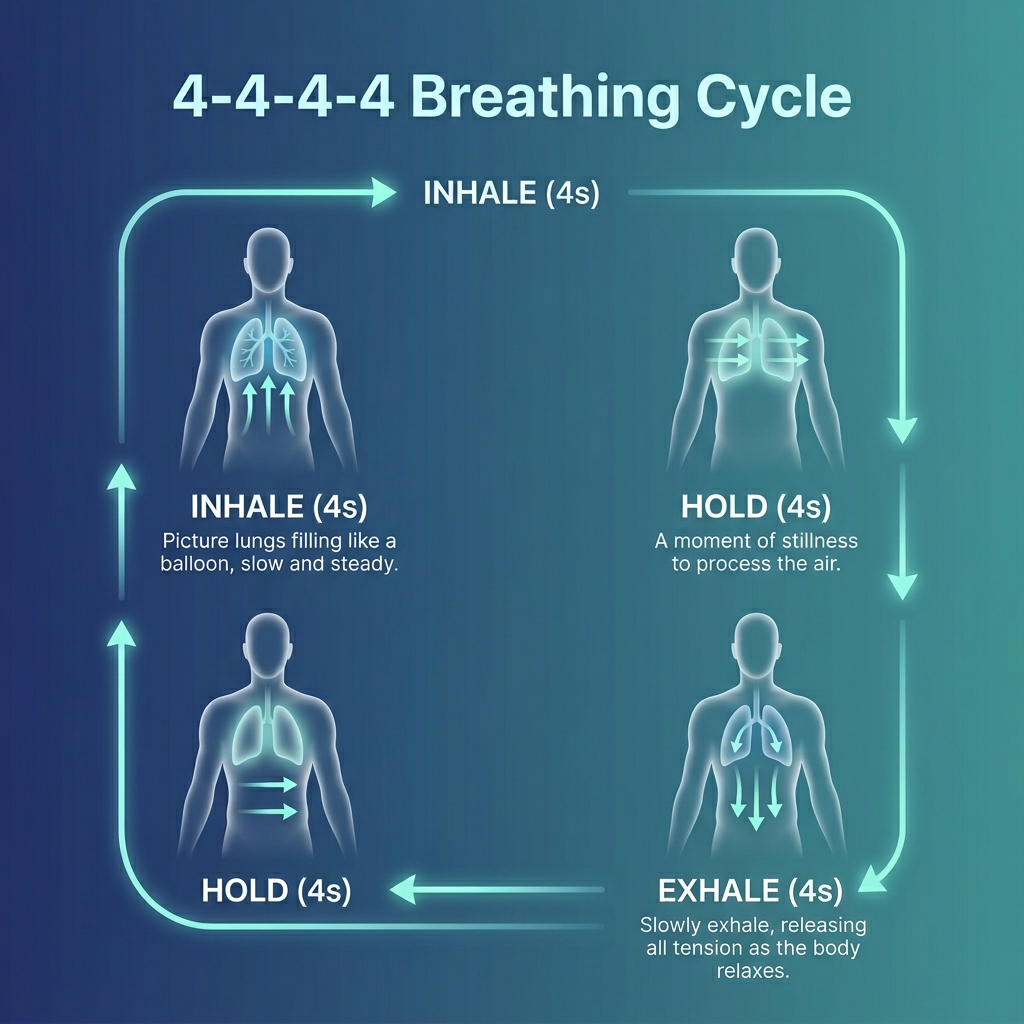
This rhythm alone begins to signal safety to your system. But the real impact comes from how you breathe in.
2. The Key Most People Miss: How You Inhale
This is where the real physiological switch happens. Most people breathe into their chest when stressed. The shoulders rise, the breath is shallow, and the system stays in a “ready” or tense state.
To fully activate the parasympathetic system, the inhale must come from the lower belly. This pulls down the diaphragm, providing full mechanical stimulation of the Vagus nerve.
Here is how to check it:
Place one hand across your lower abdomen, just below your belly button
As you inhale, gently push your belly outward so your hand moves forward
Breathing in this pulls down your diaphragm
Your chest and shoulders should stay relatively still
What is happening inside your body:
As your lower belly expands, your diaphragm is pulled downward. This is the largest breathing muscle, under your lungs. When it moves down, it opens up space for a deeper breath (up to 30% more in one breath, and physically interacts with the vagus nerve, which runs through the diaphragm and into the abdomen.
This matters.
That downward pull on the diaphragm movement creates both a mechanical and neurological signal along the vagus nerve. This is one of the body’s main parasympathetic pathways. When stimulated properly, it sends a strong “slow down, you are safe” chill signal throughout the body. (or “Relax, you got this.” message)
This is why a proper inhale changes everything.
3. What Happens Next: Body and Brain Impact
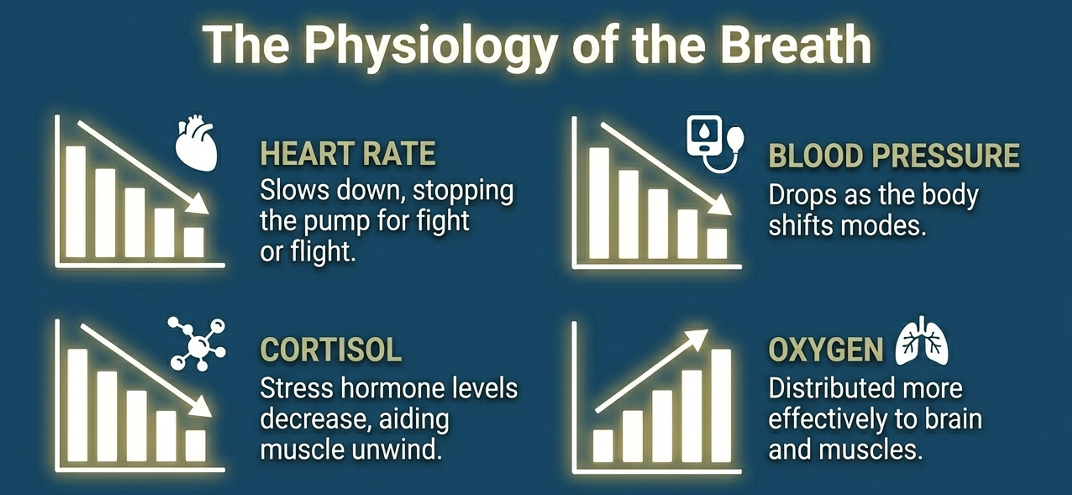
Once the parasympathetic system is activated, the effects are felt both in the body and in the brain.
In the body:
Heart rate begins to slow
Blood pressure lowers
Blood vessels relax
Muscles release tension
Your system shifts out of “go mode” and into recovery and control.
In the brain:
The mind settles
Focus becomes clearer
You begin to think more effectively
Emotional intensity, like anxiety or anger, starts to reduce
How this happens:
When the vagus nerve is activated, it reduces the activity of the stress response systems and increases communication to areas of the brain responsible for attention, decision-making, and emotional regulation. In simple terms, it quiets the noise and allows the thinking part of the brain to come back online.
4. Putting It Together: How to Do It Properly
Now combine the rhythm with the correct inhale.
Inhale for 4 seconds, expanding the lower belly (hand moves out)
Hold for 4 seconds
Exhale for 4 seconds, letting the belly fall naturally
Hold for 4 seconds
Repeat for a few cycles
Keep your shoulders relaxed. If they are rising, reset and bring the breath back down into the belly.
Think: belly moves, diaphragm is sucked down, system calms.
Next Step (Follow-Up Resource)
See the short companion piece on belly breathing vs. stress breathing, showing:
Why chest and shoulder breathing keeps the body in a stress state
How to recognize it in yourself and students
How athletes use controlled breathing to steady performance
A great real-world example is biathlon athletes. They must slow their breathing and heart rate quickly to stabilize and shoot accurately. The same physiology applies in the classroom, at work, and in everyday life.